Calamine Lotion
vs Moisturizer
What's the Real Difference?
Most Indians use these products interchangeably — or skip one entirely. Both decisions compromise your skin. This guide explains exactly what each product does, why they cannot replace each other, and how to use both for skin that actually heals.
Why Indians Confuse These Two Products — And Why It Matters
Walk into any Indian pharmacy and you will find calamine lotion and moisturizers sitting on adjacent shelves, often with similar packaging, similar price points, and — critically — no clear guidance on what problem each product actually solves. Ask the pharmacist, and you are likely to receive a vague recommendation that implies the two are broadly interchangeable: both for skin, both for daily use, both fine. This advice, well-intentioned as it is, has led to an extraordinarily widespread pattern of skin mismanagement across Indian households.
People with sunburned, inflamed skin reach for moisturizers that trap heat and worsen redness. People with oily, acne-prone skin use calamine as their sole skin product, progressively dehydrating their barrier until the skin compensates by producing even more oil than before. People with combination skin avoid both because they cannot reconcile the conflicting advice they have received. And people who need both — the majority of Indian adults with active skin concerns and underlying hydration needs — use one and skip the other, wondering why their skin never fully stabilises.
The confusion is understandable. Both products come in similar bottles. Both are applied topically to skin. Both are marketed with vague terms like "soothing" and "nourishing" that suggest comparable functions. But underneath this surface similarity, calamine lotion and moisturizer are fundamentally different tools designed to do fundamentally different things. Using one when you need the other is not a minor inconvenience — it is the difference between a skin condition resolving and worsening.
The Indian skin context makes this distinction particularly important. India's climate diversity — from the dry heat of Rajasthan to the humid coast of Kerala, from Delhi's pollution to Chennai's UV intensity — creates a range of skin challenges that require precise product selection. Indian skin tones, which predominantly range from Fitzpatrick III through VI, are more prone to post-inflammatory hyperpigmentation than lighter tones — meaning any skin inflammation that is not appropriately treated leaves visible dark marks that can persist for months. Getting the right product on inflamed skin quickly is not merely an aesthetic concern; it directly affects how visible and lasting the aftermath of that inflammation will be.
This guide explains the exact science of what calamine lotion does, what a moisturizer does, the seven core differences between them, when each should be used, how they can be combined in an effective routine, and what to look for when purchasing each in India. By the end, you will have a clear, evidence-based understanding of which product to reach for — and why — every time your skin presents a problem. This is not general skincare advice. It is a precise, applicable framework for Indian skin conditions and the Indian climate.
What Calamine Lotion Actually Is — The Dermatological Science
The Active Ingredients and Their Mechanisms
Calamine lotion is a pharmaceutical-grade topical preparation whose active ingredients are zinc oxide and ferric oxide — both inorganic mineral compounds with well-documented dermatological actions. Zinc oxide is the primary active agent. It is classified as a physical astringent, a mild antiseptic, a skin protectant, and a physical UV filter — four distinct functions from a single mineral compound. Ferric oxide contributes to the product's characteristic pink colour (the rust-coloured pigment that has made calamine visually recognisable for over a century) and provides supplementary astringent and protective action.
The anti-inflammatory mechanism of zinc oxide operates through multiple pathways. It inhibits the activation of mast cells — immune cells in the skin that release histamine, the primary mediator of itching and swelling. It suppresses the production of pro-inflammatory cytokines (particularly IL-1β and TNF-α) that sustain the inflammatory response in conditions like sunburn, contact dermatitis, and acne. And it directly modulates the nerve endings that transmit itch and pain signals, reducing the perceived intensity of these sensations without systemic antihistamine effects.
What Calamine Does to the Skin Surface
When applied to the skin, calamine lotion creates a thin, evaporative film. As the water phase of the lotion evaporates — which happens within 60 to 90 seconds at Indian ambient temperatures — it draws heat from the skin surface through the thermodynamic process of evaporative cooling. This is not a subjective sensation; it is a measurable reduction in skin surface temperature that directly reduces the sensation of burning and discomfort in inflamed tissue.
The mineral particles in calamine — zinc oxide and ferric oxide — remain on the skin surface after the water phase evaporates, forming a thin, powder-like protective layer. This layer has three effects: it physically separates the skin from environmental irritants (dust, sweat, fabric friction), it continues to provide astringent action that reduces pore size and sebum flow, and it provides a degree of physical UV scattering that reduces further UV damage while the product is on the skin.
What Calamine Cannot Do
Calamine lotion has a precise scope of function, and understanding its limitations is as important as understanding its capabilities. It does not hydrate the skin in any meaningful sense — it contains no humectants (water-attracting molecules) or occlusive agents (barrier-sealing molecules). It does not rebuild the lipid barrier that chronic dehydration, harsh cleansers, and UV damage erode over time. It does not replace the ceramides, fatty acids, or natural moisturising factors that a functional skin barrier requires. And it does not provide the sustained, film-forming moisture retention that prevents transepidermal water loss throughout the day.
What a Moisturizer Actually Does — The Barrier Science
The Three Components of Skin Moisture
Understanding what a moisturizer does requires first understanding that skin moisture is not a single thing — it is a system with three distinct components, each requiring a different type of ingredient to support it. The natural moisturising factor(NMF) is a collection of hygroscopic molecules — amino acids, lactic acid, urea — that sit in the outermost skin cells and draw water from the surrounding atmosphere into the stratum corneum. The lipid bilayer — composed of ceramides, cholesterol, and free fatty acids — forms the structural mortar between skin cells, sealing in the water the NMF has drawn in. And the skin's own sebum provides a surface-level occlusive film that slows evaporation.
A well-formulated moisturizer addresses all three components: humectants(glycerin, hyaluronic acid, sodium PCA) support the NMF function by attracting water into the skin from the environment and from deeper tissue layers. Emollients(fatty acids, plant oils, squalane) supplement the lipid bilayer, filling the gaps between skin cells and improving the barrier's structural integrity. Occlusives (petrolatum, shea butter, dimethicone) sit on the skin surface and slow the rate of transepidermal water loss — the constant, invisible evaporation of water through the skin surface that accelerates in dry or air-conditioned environments.
Why the Skin Barrier Matters for Indian Skin
The skin barrier — the outermost layer of the epidermis — is the structure that keeps moisture in and environmental aggressors out. When it is intact, skin stays hydrated, is less reactive to irritants, and heals from minor damage quickly. When it is compromised — through UV exposure, harsh products, pollution, hard water, or nutritional gaps — the opposite occurs. Moisture escapes freely (transepidermal water loss increases), irritants penetrate more easily (inflammation rises), and the skin becomes trapped in a cycle of reactivity that worsens with each round of exposure and damage.
Indian skin faces specific barrier challenges that make consistent moisturization particularly important. Hard water — prevalent across Delhi, Bengaluru, Chennai, and Pune — contains calcium and magnesium ions that disrupt the lipid bilayer, progressively weakening the barrier with each wash. The Indian sun's UV index, which reaches extreme levels (11+) in summer months across most of the subcontinent, oxidises and degrades the lipid components of the barrier faster than they can be replenished through natural sebum production. And the widespread use of soap-bar cleansers with high pH (9–10) in Indian bathrooms — compared to the skin's natural 4.5–5.5 pH — disrupts barrier function every morning before the day has even begun.
What Moisturizer Cannot Do
A moisturizer, regardless of how sophisticated its formulation, does not possess anti-inflammatory properties. It does not reduce redness, suppress itching, cool inflamed tissue, or inhibit the inflammatory cytokine cascade. It does not absorb excess sebum or reduce pore size. It does not provide meaningful UV protection in the way that SPF-rated sunscreens do. And it does not treat the acute symptom of a condition that is actively inflaming the skin — it maintains and repairs; it does not intervene acutely. For that, you need calamine or another treatment-class product.
The 7 Core Differences: Calamine vs Moisturizer
These are not subtle distinctions. Each of these seven differences represents a fundamentally different mechanism of action — confirming that calamine and moisturizer cannot substitute for each other in any clinical or practical sense.
Anti-inflammatory, antipruritic (anti-itch), astringent, and cooling. It treats a condition — itching, redness, sunburn, rashes.
Hydration delivery, moisture retention, and skin barrier reinforcement. It maintains a baseline — preventing transepidermal water loss.
Zinc oxide (primary active) and ferric oxide — both inorganic mineral compounds with documented anti-inflammatory and antiseptic properties.
Combination of humectants (glycerin, hyaluronic acid), emollients (fatty acids, oils), and occlusives (shea butter, petrolatum) — each targeting a different aspect of moisture.
Does not rebuild the lipid barrier. Provides surface protection and cooling but does not replenish ceramides, fatty acids, or the natural moisturising factor (NMF).
Directly addresses barrier dysfunction — the right moisturizer replenishes all three components of the skin's moisture barrier: the NMF, the lipid bilayer, and the cornified envelope.
Thin, milky liquid that dries to a matte, slightly powdery finish. Leaves no occlusive film on the skin. Often visibly whitish on darker Indian skin tones if applied too thickly.
Ranges from lightweight gels to rich creams. Leaves a hydrated, sometimes slightly glossy or dewy finish depending on the formula. Always leaves a film of some kind — that is its mechanism.
An acute-response product. Used when something is happening to the skin: a sunburn just occurred, a rash appeared, itching started. It addresses symptoms in real time.
A daily-maintenance product. Used morning and evening as part of a routine regardless of whether the skin is currently reacting to anything.
Not recommended as a standalone daily product for most skin types. Its astringent and drying properties, used daily without complementary hydration, can over-strip the skin over weeks.
Designed for daily use. Long-term consistent moisturization is one of the most evidence-backed interventions for slowing visible skin ageing and maintaining barrier integrity.
Applied first in a routine — after cleansing and toner, before moisturizer. Its thin, watery consistency and treatment function mean it needs direct skin contact.
Applied last (or second-to-last before SPF) to seal in all the layers applied beneath it. It is the final step before your skin meets the outside world.
Your Skin Problem — Which Product Actually Solves It
The question is not "calamine or moisturizer?" The question is "what is my skin doing right now?" Here is the answer for the four most common skin complaints in India.
Sunburn & UV-Induced Redness
Indian summers — particularly in cities like Delhi, Jaipur, and Chennai — subject skin to intense UV radiation that causes surface inflammation, redness, and a burning sensation that standard moisturizers cannot cool. Most hydrating creams trap heat rather than releasing it.
Calamine lotion provides immediate cooling via evaporative action and reduces the inflammatory response through its zinc oxide content. It is the correct first-response product for sunburned skin — moisturizer comes later, in the recovery phase.
Chronic Skin Dehydration
Year-round air conditioning, hard water in cities like Bengaluru and Pune, and low-humidity winter air in northern India strip the skin's natural moisture-retaining lipids over time, leading to persistent tightness, flaking, and compromised barrier function.
A well-formulated moisturizer replenishes humectants, restores occlusives, and rebuilds the lipid barrier. Calamine alone cannot address this — it is not designed to moisturise. For dehydration, a moisturizer with hyaluronic acid, ceramides, or glycerin is the correct tool.
Active Acne Breakouts with Inflammation
Acne in India is complicated by high humidity, pollution particles landing on open pores, and the comedogenic effect of heavy moisturizers often recommended for post-acne dryness. Applying a thick moisturizer to actively inflamed acne worsens both the inflammation and the congestion.
Calamine lotion's zinc oxide reduces the sebum overproduction that fuels acne while its astringent action minimises pore appearance. For acne-prone skin, calamine before a lightweight, non-comedogenic moisturizer is the correct layering sequence.
Rashes, Hives & Contact Dermatitis
India's diverse plant life, widespread use of synthetic fragrances in local products, and heat-triggered allergic reactions make contact dermatitis and prickly heat rashes extremely common — especially in coastal and high-humidity regions during summer.
Calamine's antipruritic and anti-inflammatory properties address the immediate symptoms: itching, swelling, and surface irritation. A moisturizer applied over an active rash provides zero antipruritic benefit and may aggravate the irritation. Calamine is the clinically appropriate response.
Complete Skin Type Suitability Guide
Every skin type has a different relationship with calamine and moisturizer. Here is the precise guidance for each — including suitability verdicts for both products side by side.
Calamine: Calamine's oil-absorbing zinc content controls shine and reduces sebum without stripping. Ideal as a daytime treatment.
Moisturizer: Heavy creams clog pores on oily skin. Only use a lightweight, water-based, non-comedogenic gel moisturizer.
Calamine: Calamine's drying action is counterproductive for chronically dry skin. Use only for acute flare-ups, not daily.
Moisturizer: Rich moisturizers with ceramides and shea butter are essential daily for dry skin — morning and night.
Calamine: Apply calamine to the oily T-zone as a spot treatment or light layer. Avoid the dry zones around cheeks and jawline.
Moisturizer: Use a lightweight moisturizer across the whole face, with a richer formulation only on the dry cheek areas.
Calamine: Calamine's gentle, fragrance-free formulation is one of the most tolerated topical treatments for reactive, sensitive skin.
Moisturizer: Fragrance-free, hypoallergenic moisturizers are appropriate. Avoid anything with essential oils or strong actives.
Calamine: Zinc oxide in calamine is anti-inflammatory and sebostatic — reducing the oil that feeds acne without over-drying.
Moisturizer: Moisturizer is still necessary, but only oil-free, non-comedogenic formulas. Skipping it entirely worsens oiliness.
Calamine: Mature skin needs lipid replenishment, not drying. Calamine is appropriate only for acute symptoms like rashes.
Moisturizer: Rich, barrier-repairing moisturizers with peptides, ceramides, and hyaluronic acid are essential for mature skin.
CALAFINE Lotion — Complete Feature Breakdown
Zinc Oxide. Instant Cooling. Formulated for Indian Skin.
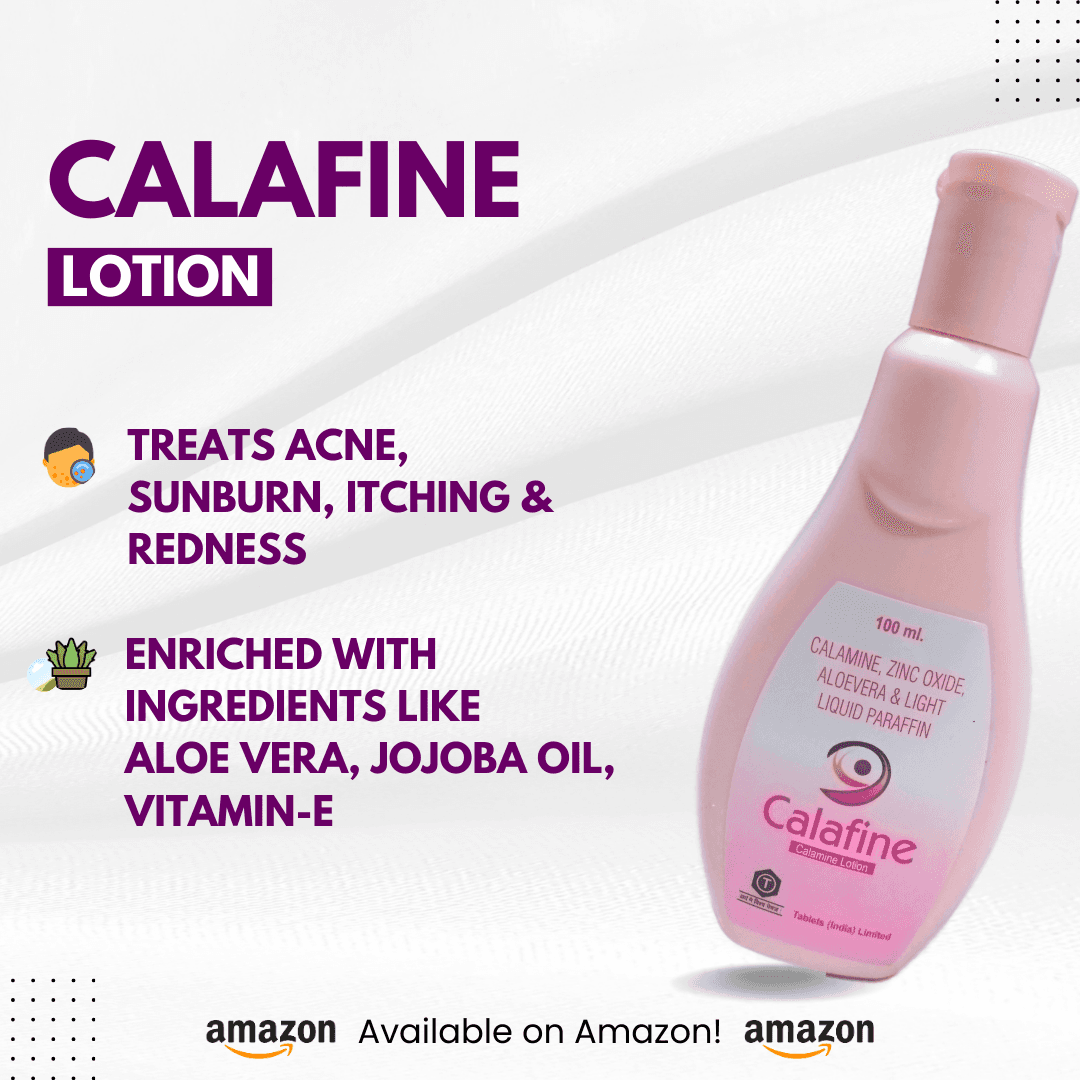
CALAFINE Lotion — the calamine upgrade designed for India's climate, skin tones, and daily skin challenges.
Buy CALAFINE Lotion on Amazon →Triple-Action Zinc Oxide Formula
CALAFINE Lotion is built around zinc oxide — one of the most clinically validated topical ingredients in dermatology, yet still widely underutilised in the Indian skincare market where chemical actives dominate. Zinc oxide performs three distinct functions simultaneously: it acts as a physical anti-inflammatory agent by suppressing the cytokine cascade that causes redness and swelling; it functions as a mild astringent by contracting pores and reducing the sebum flow that feeds acne and surface oiliness; and it provides physical UV protection by scattering and absorbing both UVA and UVB radiation at the skin's surface. This triple action makes CALAFINE uniquely suited to the Indian skin environment, where inflammation, excess sebum, and UV exposure often occur simultaneously — not as separate problems requiring separate products. The typical Indian summer day in a city like Mumbai or Chennai involves all three stressors at once: heat-induced redness, humidity-driven oiliness, and intense direct sunlight. A product that addresses all three without requiring multiple applications is a meaningful practical advantage.
The zinc oxide in CALAFINE is formulated to distribute evenly across the skin surface rather than settling in visible clumps — a common complaint with older-generation calamine formulations that left a chalky white cast, particularly on the deeper Indian skin tones that make up the majority of the population. The even distribution also means consistent coverage across the skin's surface, ensuring that the anti-inflammatory and sun-protective benefits are uniform rather than patchy.
Immediate Cooling and Anti-Itch Relief
One of the most consistently reported benefits of well-formulated calamine lotion — and one that no standard moisturizer can replicate — is the immediate sensation of cooling upon application. This is not merely a sensory effect. The cooling mechanism is rooted in the lotion's evaporative action: as the water-based carrier of the lotion evaporates from the skin's surface, it draws heat away from the inflamed tissue beneath. This is the same principle that makes sweat effective at cooling the body — evaporation is thermodynamically cooling at the tissue level, not just at the sensation level. For sunburned skin specifically — a condition extremely common among Indians who spend time outdoors between 11am and 3pm during peak summer months — this evaporative cooling provides immediate relief at the moment when the skin is hot, inflamed, and hypersensitive to touch. Applying a heavy cream to sunburned skin, by contrast, occludes the surface and traps the heat that the inflamed tissue is desperately trying to release. This is why experienced dermatologists recommend calamine-based products rather than rich moisturizers as the first response to fresh sunburn.
The antipruritic — anti-itch — mechanism of CALAFINE's zinc oxide works through a different pathway: zinc ions have a demonstrated ability to modulate the nerve endings that transmit itch signals (C-fibres) at the skin's surface. By reducing the sensitivity of these fibres, zinc oxide diminishes the perceived intensity of itching without the systemic side effects of oral antihistamines. This makes CALAFINE appropriate for prolonged, repeated use on itchy conditions like heat rash, insect bites, and mild contact dermatitis — situations where you need itch relief throughout the day without medicating your entire system.
Oil Control and Acne Support Without Over-Drying
The relationship between calamine and acne is more nuanced than most Indian skincare content suggests. Calamine does not treat acne in the way that salicylic acid or benzoyl peroxide do — it does not chemically exfoliate the pore, kill P. acnes bacteria directly, or regulate sebum gland activity at the hormonal level. What it does is manage the surface environment in which acne forms. By absorbing excess sebum, reducing pore size temporarily through astringent action, and lowering the inflammatory response that makes acne painful and red, calamine creates a less hospitable surface for the comedone-to-inflammatory-lesion progression. This surface-level management is particularly valuable for Indian skin in humid conditions — the hot, humid months of June through September in coastal cities like Kochi, Mumbai, and Chennai create conditions where sebum production is accelerated and existing acne lesions are more prone to bacterial spread. A product that controls the surface oil film daily reduces the rate at which comedones progress to inflammatory lesions, even if it does not address the hormonal or bacterial root causes.
CALAFINE is specifically formulated to provide this oil control without the aggressive drying that characterises many acne-focused products containing high-percentage salicylic acid or alcohol. Over-drying acne-prone skin — a very common outcome of harsh acne treatments in the Indian market — triggers a rebound sebum surge as the sebaceous glands compensate for the stripped surface. This rebound worsens acne in the medium term even as it briefly improves it in the short term. CALAFINE's gentler action avoids this cycle, making it appropriate for everyday use alongside a proper moisturizer and targeted acne treatment.
Suitable for All Indian Skin Tones Without Discolouration Risk
One concern that Indian consumers legitimately raise about calamine products is the white cast — the chalky, visibly white residue that older or poorly formulated calamine lotions leave on deeper skin tones. On the Fitzpatrick IV–VI skin tones that are prevalent across India, a white cast is not merely cosmetically unpleasant; it can also be used as a reason to avoid an otherwise beneficial product entirely, leading people to go without effective anti-inflammatory coverage when they need it most. CALAFINE's formulation addresses this directly. The zinc oxide particle size and suspension method are optimised for even spreading and minimal visible residue — meaning the product can be applied at a therapeutic level without the ghostly white cast of traditional calamine. This matters significantly in the Indian context because many of the moments when calamine is most needed — sun exposure, outdoor activities, post-beach or post-sport recovery — are also moments when appearing presentable matters.
Additionally, CALAFINE does not contain artificial dyes or fragrances that can cause post-inflammatory hyperpigmentation (PIH) — a condition that affects Indian skin disproportionately due to the higher melanin density that makes it more reactive to inflammatory triggers. PIH is one of the most common and persistent concerns in Indian dermatology, and choosing skincare products that do not trigger it is essential for anyone prone to dark spots. CALAFINE's clean, minimal formulation means it reduces inflammation without creating the conditions for the PIH that often follows.
How to Use Calamine and Moisturizer in the Same Routine
The most effective approach for most Indian skin types — particularly oily, combination, and acne-prone — is not to choose between calamine and moisturizer, but to use both correctly in a defined sequence. Here is the exact protocol.
Cleanse Thoroughly First
Begin with a gentle, pH-balanced cleanser to remove SPF, pollutants, and excess sebum. Both calamine and moisturizer work best on clean skin — residual sunscreen or pollution particles reduce the contact between the active ingredient and the skin surface, diminishing effectiveness.
Apply Toner or Essence (Optional)
If you use a hydrating toner or essence, apply it now. This step adds an initial layer of water-based hydration that prepares the skin to receive the subsequent layers. Pat gently — do not rub — to avoid irritating any inflamed areas before calamine application.
Apply CALAFINE Lotion to Target Areas
Shake the bottle gently before use — zinc oxide settles at the bottom and must be evenly redistributed. Apply a thin, even layer to areas of concern: sunburned skin, active acne, itchy patches, or the oily T-zone. Allow it to dry completely — approximately 60 to 90 seconds — before proceeding. Do not rub in; pat gently or let it air-dry to a matte finish.
Layer Your Moisturizer Over the Calamine
Once calamine has dried completely, apply your moisturizer over the top. The calamine's treatment layer remains active beneath; the moisturizer seals in hydration and prevents the calamine's astringent action from over-drying the skin. For oily skin: use a lightweight gel. For dry or combination skin: use a moderate cream formulation.
Finish with SPF in the Morning
Always finish a morning routine with a broad-spectrum SPF 30 or higher sunscreen applied over your moisturizer. This is non-negotiable for Indian skin exposed to the subcontropical UV index year-round. If you have applied calamine for sun protection reasons, be aware that calamine alone does not provide sufficient SPF for daily protection — it reduces UV damage but does not replace a dedicated sunscreen.
Repeat Based on Need, Not Habit Alone
Moisturizer: apply morning and evening, every day, regardless of skin condition. Calamine: apply when your skin is presenting symptoms — redness, itch, sunburn, oiliness, active breakouts. On days when your skin is calm and balanced, you may not need calamine at all. Allow your skin's signals to guide the use of the treatment product; maintain the moisturizer as a non-negotiable constant.
Results Timeline — What to Expect and When
When you begin using calamine and moisturizer correctly in the same routine, here is the realistic, condition-by-condition progression of what improves and when.
Calamine provides cooling and itch relief within minutes of application. Redness visibly reduces after the first one to two applications. If treating sunburn, the burning sensation decreases significantly within hours. Moisturizer begins restoring surface hydration from the first use — skin feels less tight after 24 hours.
Consistent calamine use on affected areas brings active inflammation under control. Acne lesions reduce in redness and size. Sunburned skin begins peeling — do not pick — as the damaged outer layer sheds. Moisturizer use prevents the excessive dryness that accompanies this shedding phase.
With regular calamine use on oily areas and consistent lightweight moisturizer on the rest of the face, sebum production begins to regulate. The paradoxical oiliness caused by dehydration — the skin producing excess oil to compensate for moisture loss — starts to correct as the skin receives adequate hydration from the moisturizer.
Post-inflammatory hyperpigmentation from treated acne lesions begins to fade. Skin texture is noticeably smoother and more even. The combined routine — calamine for acute treatment plus moisturizer for daily maintenance — has re-established the skin barrier, and the skin responds to environmental stressors with significantly less reactivity than before.
Complete Buying Guide — What to Look for in a Calamine Product in India
India's pharmacy shelves carry dozens of calamine products ranging from two-decade-old formulations in outdated packaging to newer, more sophisticatedly engineered options. Here is exactly what separates a product worth buying from one that merely carries the calamine name.
Common Mistakes Indians Make When Buying Calamine
The most widespread buying error in the Indian market is purchasing calamine based on price alone — specifically, choosing the cheapest option because "calamine is just calamine." This assumption is incorrect. Formulation quality — the particle size of zinc oxide, the suspension stability, the quality of the carrier base — varies enormously between price points and between manufacturers. A poorly suspended zinc oxide settles into an unusable paste at the bottom of the bottle and does not redistribute evenly even when shaken. A zinc oxide with oversized particles leaves a visible white cast on Indian skin tones and does not penetrate the surface layer effectively.
The second common mistake is purchasing a product labelled as "calamine lotion" that has been reformulated into a cream or gel base — changing the product's drying time, texture, and surface behaviour in ways that undermine the original mechanism. The classic calamine lotion is a liquid suspension — not a cream, not a gel. If the product you are considering does not require shaking before use and does not have the characteristic thin, milky consistency, it has been significantly reformulated and may not provide the same evaporative cooling or astringent action as the original formula.
Finally, many Indian consumers purchase calamine and moisturizer as alternatives — believing they need one or the other. The correct frame is that they are complementary products serving different functions. Budgeting for both and using each for its intended purpose produces better outcomes than budgeting for one and trying to make it do the other's job.
The right calamine for Indian skin. Zero white cast.
CALAFINE Lotion — engineered for even distribution on Indian skin tones.
Get CALAFINE Lotion on Amazon →Who Needs Calamine Lotion Most
Frequent Sun Exposure (Outdoor Workers & Commuters)
Construction workers, delivery professionals, and anyone who commutes by bike or auto in Indian cities absorb intense UV daily. Calamine post-sun is an essential recovery step.
Acne-Prone Adults Under 35
The leading demographic for acne in India — stress, humidity, and diet-driven breakouts respond well to calamine's oil control and anti-inflammatory zinc action.
Prickly Heat and Heat Rash Sufferers
India's humid summers, particularly in Kerala, West Bengal, and Odisha, make miliaria (heat rash) extremely common. Calamine is the first-line topical recommendation for prickly heat relief.
Contact Dermatitis and Allergy-Prone Individuals
Reactions to metals in jewellery, synthetic fabrics, household chemicals, and plants are common across Indian lifestyles. Calamine provides targeted relief without systemic medication.
Parents Managing Children's Skin Conditions
Calamine's gentle, zinc-based formula is appropriate for children's skin rashes, insect bites, and prickly heat — common paediatric dermatology referrals in India's summer months.
Active Individuals and Athletes
Sweat-triggered breakouts, chafing rashes, and post-workout inflammation respond to calamine's absorbing and anti-inflammatory properties. Apply to affected areas post-activity.
Those With Oily, Combination T-Zone Skin
The oily T-zone affecting a significant majority of Indian adults benefits from calamine's sebum-absorbing zinc. Applied to the T-zone before moisturizer, it controls shine throughout the day.
Anyone Transitioning Off Heavy Steroid Creams
Dermatologists often recommend calamine as a bridge product when tapering off topical corticosteroids — providing anti-inflammatory support without the rebound risk of steroid withdrawal.
Calamine vs Moisturizer — Myths vs. Truth
Calamine lotion can replace your daily moisturizer
This is the most dangerous misconception this guide addresses. Calamine lotion provides no meaningful moisturization — it does not contain humectants, emollients, or occlusives in any significant quantity. Using calamine alone as a daily skin treatment will progressively dehydrate the skin over weeks, compromising the barrier and ultimately worsening oiliness and reactivity through the dehydration-rebound mechanism.
Moisturizer can reduce sunburn redness just like calamine does
Standard moisturizers are not anti-inflammatory. They may soothe the tight, dry feeling of sunburned skin in the recovery phase, but they do not reduce the vascular dilation (redness) or inflammatory cascade of fresh sunburn. Zinc oxide in calamine is the active agent that directly modulates the inflammatory response — no amount of glycerin or shea butter achieves this outcome.
You cannot use calamine and moisturizer in the same routine
Not only can you use both — for many Indian skin types and conditions, using both in the correct layering order is the most effective approach. Calamine (applied first, allowed to dry) treats the acute condition at the skin surface. Moisturizer (applied second) seals in hydration and prevents calamine's mild drying action from over-stripping the skin. The two products are complementary, not competing.
Calamine lotion is only for children or for very serious rashes
Calamine lotion is appropriate for all ages and for conditions that range from mild to moderate. Its use as a daily oil-control product for oily skin, as a post-sun soothing product for anyone with UV exposure, and as an anti-itch product for mild irritation makes it a versatile, adult skincare tool — not merely a paediatric rash remedy from the medicine cabinet.
More expensive moisturizers are always better than calamine for skin health
Price has no correlation with skin health outcomes. Calamine lotion — one of the most affordable skincare products available in India — outperforms expensive botanical serums and premium creams in every scenario where its specific mechanism of action is needed: inflammation, itch, sunburn, and oil control. The correct product for the condition is always more effective than an expensive product used for the wrong purpose.
Calamine lotion causes skin to become dependent and more sensitive
Calamine contains no ingredients known to cause skin sensitisation, dependency, or barrier disruption with normal use. Unlike topical steroids, which do create tachyphylaxis (reduced response over time) and barrier thinning, zinc oxide-based calamine has no such pharmacological dependency mechanism. Stopping calamine use does not result in rebound inflammation beyond what the underlying condition would have produced independently.
Frequently Asked Questions
Can I use calamine lotion as a moisturizer every day?
No — and this distinction is critical. Calamine lotion is not a moisturizer and does not function as one. It contains no significant humectants, emollients, or occlusive agents. Used daily without a separate moisturizer, calamine will progressively dry the skin and compromise the barrier. Use calamine for its therapeutic functions (redness, itch, oil control) and apply a dedicated moisturizer separately for daily hydration.
Which goes on first — calamine lotion or moisturizer?
Calamine goes on first, always. Its thin, watery consistency and treatment function require direct contact with the skin surface. Apply calamine to clean skin, allow it to dry completely (60–90 seconds), then apply moisturizer over the top to seal in hydration and prevent the calamine's mild astringent action from over-drying the skin. Applying moisturizer first creates a film that blocks calamine's contact with the skin and reduces its effectiveness.
Is calamine lotion good for oily skin instead of moisturizer?
Calamine is an excellent complementary product for oily skin but should not replace moisturizer. Its zinc oxide absorbs excess sebum and controls shine effectively — making it ideal for the T-zone. However, oily skin also needs hydration; skipping moisturizer entirely causes the skin to produce more oil to compensate for the dehydration. Use calamine on oily areas first, then layer a lightweight, non-comedogenic, water-based moisturizer over the whole face.
Can I use calamine lotion for sunburn relief in India's climate?
Yes — calamine lotion is one of the most appropriate topical responses to fresh sunburn. Its cooling evaporative action draws heat away from inflamed skin, while zinc oxide reduces the inflammatory response. Apply a thin layer to affected areas as soon as possible after sun exposure. Avoid applying heavy, occlusive moisturizers to fresh sunburn — they trap heat. Switch to a repairing, ceramide-based moisturizer in the days following, once the acute phase has passed.
Does calamine lotion help with acne, or do I need a different product?
Calamine provides meaningful support for acne management without being a standalone acne treatment. It does not chemically exfoliate blocked pores (salicylic acid does this), nor does it kill acne bacteria directly (benzoyl peroxide does this). What calamine does is reduce surface sebum, minimise the inflammation that makes acne red and painful, and create a less hospitable environment for acne progression. Use it alongside — not instead of — targeted acne actives for best results.
Can calamine lotion cause skin dryness if used long-term?
Yes — calamine's astringent and oil-absorbing properties can progressively dry the skin if used daily over weeks without a complementary moisturizer. This is particularly relevant for people with combination or dry skin who might apply calamine to the whole face. The solution is simple: always layer a moisturizer over calamine, and on days when the skin is calm and not presenting symptoms, consider skipping calamine entirely and using only moisturizer.
Is calamine lotion safe to use on the face daily?
Calamine is generally safe for facial use, but daily full-face application is not universally recommended for all skin types. For oily or acne-prone skin, daily spot application on the T-zone or active breakouts is appropriate. For dry or sensitive skin, limit calamine to days when a specific symptom (redness, itch, sunburn) warrants it. The face's skin is thinner and more reactive than body skin, so the balance between calamine's treatment benefits and its drying potential matters more in this location.
Can I use calamine lotion and moisturizer together on sensitive skin?
Yes — in fact, the combination is particularly valuable for sensitive skin. Calamine provides gentle, fragrance-free anti-inflammatory coverage (zinc oxide is one of the best-tolerated topical ingredients for sensitive skin), while a fragrance-free, hypoallergenic moisturizer maintains the barrier that sensitive skin struggles to keep intact. The key for sensitive skin is ensuring both products are free of fragrances, essential oils, and alcohol.
How long does it take for calamine lotion to work on a rash or sunburn?
The cooling sensation and initial itch relief from calamine begin within minutes of application. Visible reduction in redness typically occurs within two to six hours of the first application on fresh sunburn or an acute rash. For chronic or recurring conditions like heat rash or mild contact dermatitis, consistent twice-daily application produces visible improvement over two to four days. Calamine does not produce instantaneous total resolution — it reduces and manages symptoms while the underlying condition resolves.
What is the difference between CALAFINE Lotion and a regular calamine product?
Standard calamine products use a basic zinc oxide and ferric oxide suspension that can leave a chalky white cast — particularly visible on the deeper Indian skin tones that are most prevalent across India. CALAFINE is formulated with optimised zinc oxide particle size and suspension for minimal visible residue, making it practical for daytime use on Indian skin. The formulation is also free of fragrances and aggressive preservatives that can partially undermine calamine's anti-inflammatory function.
Stop Guessing. Start Treating.
The difference between calamine and moisturizer is not a matter of preference — it is a matter of mechanism. Your sunburned, inflamed, or itchy skin needs the zinc oxide cooling and anti-inflammatory action that only calamine provides. Your chronically dehydrated skin barrier needs the humectants and occlusives that only a moisturizer delivers. CALAFINE Lotion gives you the treatment half of this equation — formulated without white cast, without harsh additives, and with the zinc oxide concentration that Indian skin conditions require.
Buy CALAFINE Lotion on Amazon — Treat Your Skin Right →Calamine-Based · All Skin Types · Fragrance-Free Formula · Free Delivery Available