Best Face Wash for
Teenagers with Acne
The Complete India Guide 2026
Teenage acne in India is not just a skin problem — it is a hormonal, environmental, and nutritional challenge that generic face washes are not built to handle. This is the evidence-based guide to clearing it properly.
Why Teenage Acne in India Is a Unique Challenge — and Why Most Face Washes Fail It
Look at any group of Indian teenagers and the skin reality is immediate and clear. Acne is not an exception or an outlier among adolescents in India — it is the rule. Prevalence studies consistently place acne among the top three dermatological concerns affecting the 13–22 age group across Indian cities and towns, with rates running higher in urban populations where pollution, heat, and dietary patterns compound the hormonal triggers that drive the condition universally during puberty.
What makes teenage acne specifically challenging in the Indian context is the convergence of factors that would be damaging to adolescent skin individually but are truly destructive in combination. Puberty brings a surge in androgen hormones — testosterone in both male and female adolescents — that dramatically upregulates the sebaceous glands, producing far more skin oil than the follicle can efficiently drain. This creates the perfect environment for Cutibacterium acnes — the bacterium that converts a blocked pore into an inflammatory lesion — to proliferate unchecked. This hormonal mechanism is universal across populations. What is specific to India are the amplifying factors layered on top of it.
India's climate is the first amplifier. The tropical and subtropical temperatures that characterise most of the country — including cities where the majority of India's teenage population lives — keep sebaceous glands perpetually stimulated by heat. The humidity of the monsoon season, which is intense across coastal and inland regions alike, creates a continuous sweat-sebum mixture on the skin's surface that is exceptionally conducive to pore blockage. In contrast, the dry winter months in northern cities like Delhi and Jaipur dehydrate the skin's outer layer, causing dead skin cell accumulation that seals pores from the outside. Indian teenage skin navigates these extremes across twelve months every year — and requires a face wash that works across this climatic range.
Urban pollution is the second amplifier. India's major cities consistently rank among the world's most polluted, and the particulate matter, hydrocarbons, and heavy metal compounds suspended in urban air land on exposed skin throughout every day. These particles penetrate open pores, mix with sebum, and oxidise — creating highly inflammatory compounds that trigger and worsen acne directly. Teenagers commuting to school and college in cities like Delhi, Mumbai, and Bengaluru accumulate significant daily pollution exposure on their skin that compounds the hormonal acne drivers they are already dealing with.
The dietary patterns common among Indian teenagers add a third layer. High-glycaemic foods — white rice, refined flour products, sugary beverages — are now well-established in dermatological research as acne-exacerbating through their effect on insulin-like growth factor 1 (IGF-1), which amplifies sebum production at the gland level. The combination of canteen food, fast food consumption, and irregular meal timing that characterises many Indian teenagers' diets creates a glycaemic environment that is chronically proinflammatory for the skin.
And then there is the psychological dimension. Acne during adolescence — when social identity, peer relationships, and self-perception are being formed — carries a psychological burden that is genuinely significant. Research consistently documents that teenage acne is associated with reduced self-esteem, social withdrawal, and in more severe cases, clinically significant anxiety and depression. The cosmetic consequence of Indian-skin-specific post-inflammatory hyperpigmentation — where every healed pimple leaves a dark mark lasting months — amplifies this burden beyond what teenagers with lighter skin tones experience.
This guide covers everything a teenager, parent, or caregiver needs to know about addressing acne through daily cleansing: the biology of why teenage acne forms the way it does, which ingredients actually work and why, how to use a face wash correctly for maximum effect, what realistic results look like and when to expect them, and a complete buying guide for selecting the right product in India's overwhelmingly crowded face wash market. Read this once, understand it fully, and build a cleansing habit that actually changes your skin.
The Science of Teenage Acne — What Is Actually Happening in Your Skin
The Sebaceous Gland and the Hormonal Trigger
Every hair follicle on the face is connected to a sebaceous gland — a small, oil-secreting structure embedded in the dermis whose primary function is to produce sebum, the skin's natural lubricant and antimicrobial barrier. In childhood, sebaceous glands are relatively dormant. Puberty changes this fundamentally. The androgen hormones released during adolescence — particularly dehydroepiandrosterone (DHEA) and testosterone — bind to androgen receptors on the sebaceous gland cells, dramatically upregulating their secretory activity. The result is a three to five-fold increase in sebum production compared to pre-pubertal baseline. This is not a pathology — it is a normal biological response. But it creates the conditions for acne to develop.
The Four-Step Acne Formation Sequence
Acne does not appear randomly. It follows a predictable four-step sequence that occurs inside the follicle, beneath the skin's surface, long before any visible pimple appears. Understanding this sequence explains why a face wash used consistently can interrupt the cycle at multiple points — not just treat visible acne that has already formed.
The first step is hyperseborrhoea — excess sebum production driven by androgens. The second step is follicular hyperkeratinisation — an abnormal increase in the rate at which dead skin cells accumulate inside the follicle wall, failing to shed normally and beginning to form the plug that will block the pore. The third step is comedone formation — when the sebum and dead skin cell accumulation seals the follicle, forming either a closed comedone (whitehead) or an open comedone (blackhead, where the surface oxidises on contact with air). The fourth and final step is bacterial colonisation and inflammation — where Cutibacterium acnes, feeding on the sebum trapped in the comedone, triggers an immune response that causes the redness, swelling, and pain of inflammatory acne.
Why Indian Skin Scars Differently from Acne
Indian skin — predominantly Fitzpatrick Types III, IV, and V — responds to skin inflammation differently from lighter skin types in one critically important way: the melanocytes (pigment cells) in deeper-toned skin are more reactive to inflammatory signals. When inflammation occurs at an acne site, these melanocytes produce excess melanin as part of the skin's wound-healing response — resulting in the post-inflammatory hyperpigmentation (PIH) that leaves dark brown or reddish marks at every healed pimple site. These marks are not scars in the structural sense — they do not involve tissue loss or fibrosis — but they are persistent, taking three to twenty-four months to fade without active brightening treatment.
This PIH tendency means that for Indian teenagers, effective acne management requires not just clearing active breakouts but simultaneously preventing the dark marks that form at every breakout site. A face wash that addresses only acne bacteria and sebum while doing nothing to prevent pigmentation is solving half the problem at best.
Key Ingredients That Actually Clear Teen Acne — and the Science Behind Each
Salicylic Acid — The Pore-Penetrating BHA
Salicylic acid's effectiveness in acne treatment is rooted in a single chemical property: it is lipid-soluble. While water-based cleansing ingredients clean the skin surface, salicylic acid dissolves directly into the sebum inside the follicle and travels down into the pore where comedones form. Once inside, it performs keratolysis — the chemical dissolution of the protein bonds holding dead skin cells together — effectively clearing the follicular blockage that is the structural cause of every pimple. This pore-clearing action, combined with its clinically documented anti-inflammatory properties, makes salicylic acid the most evidence-supported OTC acne ingredient for daily use in a face wash format.
Vitamin C — Beyond Brightening
The dermatological benefits of topical vitamin C for acne-prone skin extend significantly beyond its well-known brightening action. As a potent antioxidant, it neutralises the reactive oxygen species (free radicals) produced during the inflammatory response to Cutibacterium acnes — reducing the oxidative damage to surrounding skin tissue that worsens the severity and duration of each inflammatory lesion. As a tyrosinase inhibitor, it prevents the PIH formation that occurs at every inflamed acne site. As a collagen synthesis co-factor, it supports the skin's repair process after inflammation resolves. Vitamin C in a daily face wash delivers all three benefits with each use.
Orange Extract — Bioactive Synergy
Orange extract brings natural flavonoids — particularly hesperidin — that have documented antimicrobial activity against acne-associated bacteria, mild natural astringency that visibly refines pore appearance post-wash, and additional vitamin C precursors that reinforce the ascorbic acid in the formula. The natural citrus acids also provide a supplementary exfoliating effect that enhances the salicylic acid's pore-clearing action. The combined formulation creates a face wash where each active ingredient amplifies the others — an important distinction from products that list multiple ingredients but formulate them at concentrations too low to interact meaningfully.
What to Avoid in a Teen Acne Face Wash
Ingredients that worsen teenage acne fall into two categories. Comedogenic ingredients — those that clog pores — include cocoa butter, isopropyl myristate, sodium laureth sulphate at high concentrations, and certain silicones. Irritating ingredients — those that damage the skin barrier and worsen inflammation — include synthetic fragrances, alcohol (ethanol or isopropyl alcohol listed early in the ingredient deck), menthol at high concentrations, and physical exfoliating particles (walnut shell, apricot kernel) that cause micro-tears in inflamed skin. A face wash for teenage acne should contain neither category. If it stings, burns, or leaves skin red after washing, it is damaging the barrier it should be protecting.
Your Acne Problem — And the Specific Solution
Teenage acne manifests differently across individuals. Here is the breakdown of the four most common presentations in Indian teenagers — and how the right face wash addresses each.
Hormonal Breakouts on the Chin and Jawline
Puberty triggers a surge in androgens — particularly testosterone — that dramatically increases sebum production in the skin's sebaceous glands. The chin, jawline, and lower cheeks are the most androgen-sensitive areas, producing concentrated, deep-seated breakouts that are painful and often cystic.
Salicylic acid penetrates the oil-filled follicle, dissolving the comedone and reducing the inflammatory cascade that turns a blocked pore into a painful cyst. Daily use prevents the sebum accumulation that triggers this cycle.
Blackheads and Open Comedones Across the Nose
The nose and central forehead are home to the highest density of sebaceous glands on the human face. In teenage skin, where sebum production is at its hormonal peak, these pores fill continuously — oxidising at the surface and turning into the dark-tipped blackheads that are among the most persistent cosmetic complaints of adolescence.
Vitamin C and orange extract provide mild keratolytic action that prevents the skin cell buildup sealing sebum inside the pore. A face wash with these brightening actives used twice daily keeps pores clearer and reduces new blackhead formation significantly.
Excessive Oiliness by Midday
Indian teenagers — particularly those in humid cities like Chennai, Kolkata, and Mumbai — frequently describe their skin becoming visibly shiny within hours of washing. This is not poor hygiene. It is the reality of sebaceous glands stimulated by hormones, heat, and humidity simultaneously, producing far more sebum than the skin's surface can absorb or distribute naturally.
A face wash formulated for oil control removes excess sebum at the pore level without stripping the skin's natural moisture barrier — the critical balance that harsh soaps fail to achieve. Properly controlled oil production means a matte, clear complexion that lasts through a school or college day.
Post-Acne Dark Spots and Hyperpigmentation
Indian skin — classified predominantly as Fitzpatrick Types IV and V — is genetically predisposed to post-inflammatory hyperpigmentation (PIH). This means that when a pimple heals, it frequently leaves behind a brown or dark red mark that takes months to fade without targeted brightening treatment. For teenagers, this cycle of breakout followed by persistent dark spot causes significant distress.
Vitamin C is the most clinically validated brightening ingredient available in over-the-counter skincare. Its mechanism — inhibiting tyrosinase, the enzyme responsible for melanin production — directly addresses the root cause of PIH. Daily use of a vitamin C face wash prevents new dark spots from forming and gradually fades existing ones.
Complete Skin Type Suitability Guide for Teenagers
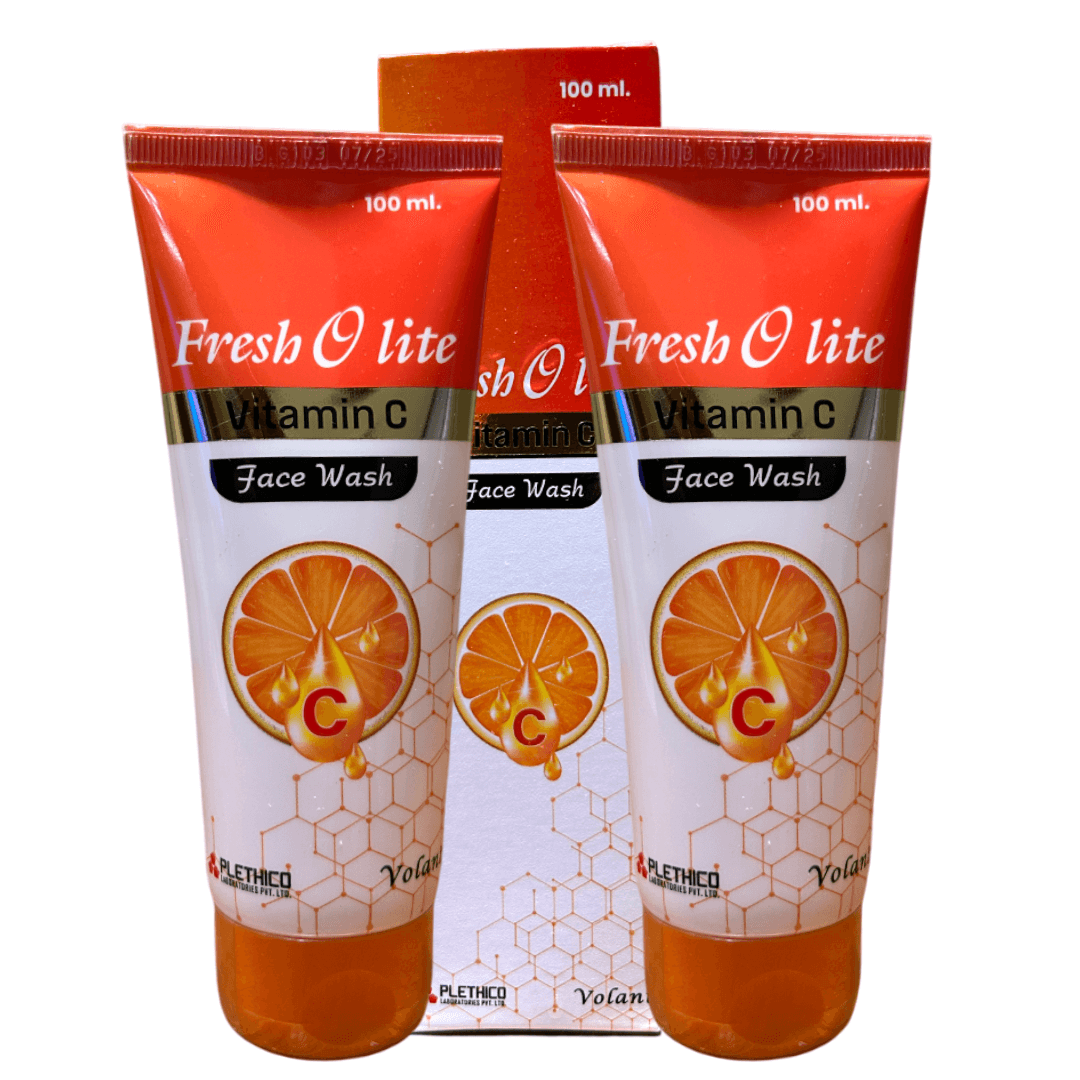
FreshOLite Vitamin C Face Wash is formulated for broad compatibility across teenage skin types. Here is a precise assessment for each.
This face wash is purpose-built for oily teenage skin. The salicylic acid and cleansing agents remove excess sebum effectively while the vitamin C and orange extracts prevent the dullness that oil-stripping cleansers cause. Use twice daily without hesitation.
The combination of salicylic acid (exfoliating and anti-inflammatory), vitamin C (brightening and antioxidant), and orange extract (antimicrobial) makes this an ideal daily cleanser for acne-prone teenage skin at any stage of a breakout cycle.
Combination skin — oily T-zone with normal or dry cheeks — is the most common skin type among Indian teenagers. The balanced formula cleanses the oily zones without over-drying the drier areas, making it versatile across the entire face.
The formula is gentle enough for mild sensitivity. Perform a patch test before first use. Those with very reactive skin should start with once-daily use in the evening, building to twice daily as tolerance is established over one to two weeks.
Dry skin with occasional acne responds well to this cleanser used once daily at night. Follow with a non-comedogenic moisturiser immediately after to replenish the moisture barrier. Do not use twice daily if your skin feels tight after cleansing.
Teenagers with currently normal skin benefit significantly from a vitamin C and salicylic acid face wash as a preventive measure — particularly during monsoon season and periods of stress when hormonal fluctuations are likely to trigger breakouts.
FreshOLite Vitamin C Face Wash — Feature-by-Feature Breakdown
Salicylic Acid + Vitamin C + Orange Extract. Built for Teenage Acne.
The complete acne-clearing face wash formulated for Indian teen skin, climate, and skin tone.
Get FreshOLite Vitamin C Face Wash on Amazon →Salicylic Acid: The Gold Standard for Acne-Prone Teen Skin
Salicylic acid belongs to the beta-hydroxy acid (BHA) family of chemical exfoliants, and its defining characteristic — the one that makes it uniquely effective for acne treatment — is its lipid solubility. Unlike alpha-hydroxy acids (AHAs) such as glycolic and lactic acid, which dissolve in water and therefore work primarily on the skin's surface, salicylic acid dissolves in oil. This means it can penetrate directly into the sebum-filled follicle — the pore itself — and work at the site where acne actually begins. Inside the follicle, salicylic acid performs two critical functions. First, it dissolves the protein bonds holding together the dead skin cells that accumulate inside the pore wall, creating the comedone (blocked pore) that is the precursor to every visible pimple. This is the keratolytic action that dermatologists value most in salicylic acid — it addresses acne at the structural level rather than simply treating its surface manifestations. Second, salicylic acid has well-documented anti-inflammatory properties, reducing the redness and swelling associated with active inflammatory acne lesions. For a teenager dealing with painful, red pimples, this dual action — clearing the blockage and reducing the inflammation simultaneously — is precisely what is needed from a daily cleanser.
The concentration of salicylic acid in a daily face wash is deliberately calibrated for safe, repeated use rather than the higher concentrations found in targeted spot treatments. This makes it appropriate for twice-daily application without the barrier disruption risk that comes from over-exfoliation. For Indian teenagers in particular — where the temptation to aggressively scrub or over-cleanse acne-prone skin is commonly reported as a skin-worsening habit — a salicylic acid face wash provides the active exfoliation needed without the damage of physical scrubbing. The skin is cleared through chemistry rather than abrasion, which is significantly gentler and more effective.
Vitamin C: Brightening, Antioxidant Protection, and PIH Prevention
Vitamin C — ascorbic acid and its derivatives — is one of the most comprehensively studied topical skincare ingredients in dermatological literature. Its relevance to teenage acne specifically extends beyond the brightening effect it is most commonly associated with. For adolescent skin dealing with the post-acne hyperpigmentation that disproportionately affects Indian skin tones, vitamin C is not a cosmetic addition to the formula — it is a therapeutic one. The mechanism through which vitamin C addresses post-inflammatory hyperpigmentation is well-understood: it inhibits tyrosinase, the key enzyme in the melanin synthesis pathway. When skin is inflamed — as it is during and after every active pimple — melanocytes (the pigment-producing cells) are stimulated to overproduce melanin at the site of inflammation. In individuals with darker skin tones, this excess melanin production is more pronounced and longer-lasting, resulting in the dark brown or deep red marks that persist for months after the acne itself has resolved. By interrupting tyrosinase activity during the cleansing step, vitamin C reduces the intensity of this hyperpigmentation response from the very beginning of each breakout cycle.
The antioxidant function of vitamin C is equally important for teenage skin that is perpetually exposed to urban environmental stressors. Free radicals generated by UV radiation, air pollution, and the oxidative stress of inflamed skin directly damage the skin's collagen infrastructure and exacerbate acne inflammation. Vitamin C neutralises these free radicals, providing a daily protective layer that reduces the cumulative environmental damage that worsens acne and accelerates the formation of post-acne marks. For teenagers in cities like Delhi, Bengaluru, and Mumbai — where air quality is consistently poor — this antioxidant protection is not incidental. It is a material benefit that meaningfully improves the skin's resilience over time.
Orange Extract: Antimicrobial Activity and Natural Brightening Synergy
Orange extract — derived from Citrus sinensis — brings a complementary set of bioactive compounds to the formulation that work synergistically with the salicylic acid and vitamin C. The extract is rich in flavonoids, particularly hesperidin and naringenin, which have demonstrated antimicrobial activity against Cutibacterium acnes (formerly Propionibacterium acnes) — the bacterial species most directly implicated in converting a blocked pore into an inflammatory acne lesion. While orange extract is not a primary antibacterial ingredient at face wash concentrations, its contribution to the formula's overall antimicrobial environment reduces the bacterial load on the skin's surface with each wash. The natural vitamin C precursors present in orange extract reinforce the ascorbic acid in the formula, providing a sustained release of brightening compounds that continues working on the skin after the face wash is rinsed off. This synergy between added vitamin C and orange extract's natural citrus compounds creates a more comprehensive brightening effect than either ingredient would deliver alone — relevant for the dark spots and uneven skin tone that are among the most visible consequences of teenage acne on Indian skin.
Orange extract also contributes a mild astringent action — the natural tannins in the citrus peel tighten the appearance of enlarged pores temporarily after washing, giving the skin a smoother, more refined appearance immediately post-cleanse. For teenagers who are self-conscious about the visible pore size that frequently accompanies oily, acne-prone skin, this immediate cosmetic benefit — alongside the longer-term therapeutic benefits — makes the daily cleansing ritual feel rewarding rather than just medicinal. Skincare compliance among teenagers is a real clinical challenge; when a product delivers visible results immediately as well as long-term, consistent use becomes significantly more likely.
Gentle, Non-Stripping Formula Built for Indian Teen Skin Realities
The single most counterproductive mistake teenage acne sufferers make — and the one dermatologists report most frequently in clinical practice — is over-cleansing. The reasoning is intuitive but incorrect: if oily skin causes acne, then removing as much oil as possible as forcefully as possible should help. In reality, stripping the skin of its natural oils triggers a compensatory sebum overproduction response — the skin's sebaceous glands detect the deficit and increase oil output to compensate, leaving the skin oilier and more acne-prone than before the aggressive cleanse. This rebound oiliness cycle is extremely common among Indian teenagers who use harsh bar soaps, alcohol-based cleansers, or physical scrubs as their primary acne management tool. These products disrupt the skin's acid mantle — the slightly acidic pH barrier that protects against pathogenic bacteria — weakening the skin's first line of defence precisely when bacterial acne is the primary concern. The result is a skin barrier that is simultaneously stripped, irritated, and more vulnerable to the bacterial colonisation that drives inflammatory acne. The formula in FreshOLite Vitamin C Face Wash is calibrated to cleanse effectively within the optimal pH range for skin health, removing excess sebum and impurities without triggering this rebound cycle.
The practical implications for Indian teenagers are significant. A face wash that does not over-strip is one that can be used consistently — morning and night, through the humid monsoon months and the dry winter season — without the dryness, tightness, and flakiness that cause teenagers to abandon their skincare routine. Routine abandonment is the primary reason most OTC acne products appear to fail: the product is adequate, but the perceived discomfort of use prevents the consistency that results require. A formula that leaves skin feeling clean, balanced, and comfortable after every wash is one that gets used twice daily, every day — which is the only application frequency that produces the meaningful, sustained improvement in acne that teenagers and their parents are looking for.
Step-by-Step Cleansing Guide for Teenage Skin
The technique with which you wash your face matters as much as the product you use. Most teenagers wash incorrectly — too quickly, too harshly, or with the wrong water temperature. Follow this protocol precisely.
Wet Your Face with Lukewarm Water
Always begin with lukewarm water — not hot, not cold. Hot water strips the skin's natural oils aggressively and can worsen redness and inflammation around active pimples. Cold water does not adequately open the pore for effective cleansing. Lukewarm is the precise temperature that softens the sebum inside the pore without disrupting the skin barrier, allowing the cleanser to work optimally.
Apply a Coin-Sized Amount to Your Fingertips
Dispense a coin-sized amount of FreshOLite Vitamin C Face Wash onto your clean fingertips. More product does not mean better cleansing — excess cleanser simply rinses away without additional benefit. Use your fingertips, not a washcloth or sponge, which harbour bacteria and cause unnecessary friction against already-inflamed skin.
Lather and Massage for 60 Seconds
Work the cleanser into a lather between your palms before applying it to your face. Apply to your face and massage in gentle circular motions for a full 60 seconds — this is the minimum contact time for the salicylic acid to penetrate the pore and begin its keratolytic action. Focus extra time on the T-zone (forehead, nose, chin) where blackheads and active breakouts are most concentrated. Do not scrub — let the chemistry work, not the pressure.
Rinse Thoroughly with Lukewarm Water
Rinse completely until no cleanser residue remains. Incompletely rinsed cleanser sitting on the skin is a common cause of irritation and can worsen acne by mixing with sebum and blocking pores. Pay special attention to the hairline, jawline, and the sides of the nose — areas where cleanser residue commonly accumulates and is rarely rinsed adequately.
Pat Dry Gently — Never Rub
Use a clean, soft towel to pat your face dry — never rub or drag. Rubbing a towel across active acne lesions causes unnecessary mechanical irritation, spreads bacteria from the towel surface to other areas of the face, and worsens the post-inflammatory redness that leads to dark spots. A dedicated face towel washed at least every three days significantly reduces bacterial cross-contamination.
Follow with Moisturiser and Sunscreen (Morning) or Spot Treatment (Evening)
Even oily, acne-prone teenage skin needs a moisturiser. After cleansing, apply a lightweight, non-comedogenic moisturiser to maintain the skin barrier. In the morning, follow with a broad-spectrum SPF 30 or higher sunscreen — absolutely non-negotiable for anyone using vitamin C and salicylic acid, as both increase photosensitivity. In the evening, apply any prescribed spot treatment or targeted acne serum after moisturising.
Realistic Results Timeline — What to Expect and When
Acne treatment operates on biological timescales. Here is an honest, week-by-week account of what consistent twice-daily use of FreshOLite Vitamin C Face Wash delivers.
Some teenagers notice a mild initial purging — a brief increase in small pimples or whiteheads as the salicylic acid begins clearing congested pores. This is a normal and expected response. It indicates the cleanser is working. Do not stop using it. The skin is clearing impactions that were already forming beneath the surface before treatment began.
Visible shine and oiliness throughout the day begins to reduce. Existing pimples appear less angry and red — the anti-inflammatory action of salicylic acid is reducing swelling and redness. Blackheads look slightly less prominent as the keratolytic action begins loosening their contents.
The frequency of new pimples forming begins to decrease noticeably. The anti-bacterial environment created by the cleanser and the improved pore-clearing are preventing the comedone formation that triggers new breakouts. Skin texture begins to feel smoother and more even.
A meaningful reduction in active acne is visible by week four of consistent twice-daily use. Post-acne dark spots — the PIH marks from previous breakouts — begin to visibly lighten as the accumulated vitamin C action reduces melanin concentration. Overall skin tone appears more uniform and brighter.
This is when the results become unmistakable and visible to others, not just to the teenager themselves. Acne frequency is dramatically reduced. Existing marks are significantly faded. Pore appearance is refined. The skin's overall clarity and brightness are at their best. This is the phase where consistent habits become self-reinforcing because the visible results are motivating.
Complete Buying Guide — What to Look for in a Teen Acne Face Wash in India
India's face wash market is saturated with products whose packaging promises acne clearance that their formulas cannot deliver. Here is exactly what separates an effective teen acne face wash from a cosmetic cleanser marketed with acne imagery.
The Most Common Buying Mistakes Indian Teenagers Make
The first and most pervasive buying mistake is selecting a face wash based on advertising — specifically, on the appearance of the model in the advertisement rather than the ingredient list on the bottle. Skincare advertising in India is dominated by fairness and glow claims that have no clinical basis, and acne products are not exempt from this pattern. A face wash promising "crystal clear skin in 7 days" backed by a celebrity endorsement should prompt immediate scrutiny of the ingredient list. If salicylic acid or a clinically validated active ingredient does not appear prominently, the claim is cosmetic marketing, not therapeutic fact.
The second common mistake is purchasing based on fragrance or immediate skin feel rather than long-term results. Face washes with strong mint, menthol, or artificial fragrance deliver an immediate sensation of freshness and cleanliness that many teenagers associate with effectiveness. In reality, these ingredients are among the most common causes of contact dermatitis and skin barrier disruption in adolescent skincare — particularly for already inflamed, acne-compromised skin. A slight tingle or cooling sensation from menthol is not a sign the product is working. It is a sign the product contains an irritant.
The third mistake — particularly relevant in India where value-for-money is a primary purchase driver — is buying the cheapest available acne face wash without checking whether the active ingredients are present at effective concentrations. Salicylic acid at 0.01% in a face wash produces no meaningful anti-acne effect. The ingredient can appear on the label at any concentration. A product priced well below market rate for salicylic acid face washes often achieves that price point by including the active at sub-therapeutic levels — making it functionally a plain cleanser at acne-wash pricing.
The right ingredients. The right formula. The right results.
FreshOLite Vitamin C Face Wash — Salicylic Acid, Vitamin C, Orange Extract for Indian teenage skin.
Shop FreshOLite on Amazon — Best Price →Who Needs FreshOLite Vitamin C Face Wash Most
School Students (Ages 13–17)
The peak hormonal surge of early to mid-puberty drives the most intense acne. A twice-daily face wash habit established at this stage prevents the severe scarring that forms when teenage acne is left unmanaged or treated aggressively with harsh products.
College Students (Ages 17–22)
Exam stress, irregular sleep, hostel food quality, and late-night screen exposure all worsen acne in the late teenage years. A reliable daily face wash is the most accessible, lowest-barrier skincare intervention available.
Teenage Girls with Hormonal Breakouts
Cyclical breakouts around menstruation — typically on the chin and jawline — respond well to consistent salicylic acid use maintained throughout the month, not just during the premenstrual phase when breakouts appear.
Teenage Boys with Oily, Acne-Prone Skin
Testosterone-driven sebum production is highest in teenage boys, creating extremely oily skin that is highly acne-prone. Daily salicylic acid cleansing is the single most impactful intervention for managing this oil excess at the skin surface.
Urban Teens in Polluted Cities
Airborne particulate matter in cities like Delhi, Mumbai, and Kolkata lands on the skin throughout the day, mixing with sebum and oxidising into pore-clogging deposits. A thorough twice-daily cleanse with an active face wash removes this accumulation before it triggers breakouts.
Teens Active in Sports and Exercise
Post-workout sweat mixing with sebum and sports equipment contact (helmet straps, sweatbands) creates an acne-triggering environment. A face wash used immediately after exercise removes sweat and sebum before they have time to block pores.
Teens with Post-Acne Dark Spots
The vitamin C in FreshOLite Face Wash makes it specifically valuable for teenagers who have already accumulated hyperpigmentation marks from previous breakouts and need both acne prevention and PIH treatment simultaneously.
Teens Who Have Tried Everything Without Results
If previous face washes have either dried the skin out completely or failed to control breakouts, the issue is likely either the wrong active ingredients or a stripping formula triggering rebound oiliness. The balanced salicylic acid and vitamin C combination addresses both failure modes.
Teenage Acne Myths vs. Truth — What Indian Teenagers Get Wrong
Washing your face more often clears acne faster
Washing more than twice daily strips the skin's acid mantle, triggers compensatory sebum overproduction, and worsens acne by disrupting the barrier against bacterial colonisation. Twice daily — morning and evening — is the clinically supported optimal frequency. Over-cleansing is one of the most common self-reported habits that dermatologists identify as actively worsening teenage acne.
You should feel a "squeaky clean" tightness after washing for the cleanser to have worked
That squeaky-clean tightness is the sensation of an over-stripped skin barrier — it indicates the cleanser has removed not just excess sebum and impurities but also the natural lipids that maintain the skin's protective function. A well-formulated acne face wash leaves skin feeling clean and balanced, not tight or dry. Tightness after cleansing is a warning sign, not a success indicator.
Acne is caused by not washing your face enough — it means your skin is dirty
Acne is a disease of the sebaceous gland and hair follicle, driven primarily by hormones, genetics, and the skin's inflammatory response to bacterial colonisation. It is not caused by poor hygiene. Teenagers with excellent cleansing habits still get acne; those who rarely wash their faces may have clear skin. Hygiene is a contributing factor in severity but never the primary cause. This misconception causes significant unnecessary shame and stigma.
Natural or herbal face washes are safer and more effective for teenage acne than those with active ingredients
The word "natural" has no regulatory definition in Indian cosmetics labelling. Many products marketed as natural contain synthetic preservatives, fragrances, and surfactants alongside plant extracts. More importantly, the active ingredients with the strongest clinical evidence for acne treatment — salicylic acid, vitamin C, niacinamide — are either synthetically produced or their natural versions are standardised to specific concentrations not achievable from raw plant material. Evidence, not origin, determines effectiveness.
If a face wash makes your skin break out initially, it is not working and you should stop
Initial purging — a brief increase in breakouts during the first one to two weeks of using a new active face wash — is a well-documented phenomenon caused by the accelerated exfoliation bringing subsurface congestion to the surface faster than it would have appeared naturally. Purging resolves within two to four weeks. The distinction between purging (which resolves) and a genuine allergic reaction (which does not and involves redness, itching, or stinging) is important. If there is no irritation beyond new pimples appearing, continue using the product.
You do not need a separate face wash if you already use a body wash or shampoo on your face
Body washes and shampoos are formulated for skin and scalp with different pH, oil content, and cell turnover characteristics than the face. Their surfactant concentrations and pH levels are incompatible with facial skin — particularly acne-prone teenage skin — and regular use on the face worsens the skin barrier, increases sebum rebound, and significantly increases acne severity. The face requires a product specifically formulated for facial skin pH and oil dynamics.
Frequently Asked Questions About Face Wash for Teenage Acne
How many times a day should a teenager wash their face if they have acne?
Twice daily — once in the morning and once in the evening before bed — is the optimal frequency for acne-prone teenage skin. Morning cleansing removes the sebum and cell debris that accumulate overnight, while evening cleansing removes the day's pollution, SPF, and sebum buildup before it has time to fully oxidise and block pores. Washing more than twice daily worsens acne by stripping the skin barrier and triggering compensatory oil production.
Is FreshOLite Vitamin C Face Wash safe for a 13-year-old with acne?
Yes. The formulation is calibrated for gentle daily use appropriate for teenage skin from early puberty onwards. The salicylic acid concentration in the face wash is within the safe range for adolescent skin. If your teenager has particularly sensitive or reactive skin, begin with once-daily evening use and observe for any irritation before building to twice daily. If irritation occurs, discontinue use and consult a dermatologist.
Can boys and girls both use this face wash?
Absolutely. Teenage acne is driven by the same hormonal mechanisms — androgen-stimulated sebum overproduction — in both male and female adolescents. The face wash is equally effective for both. Boys typically have higher sebum production levels due to higher testosterone, so they may find twice-daily use particularly beneficial. Girls with cyclical hormonal breakouts will benefit from consistent use throughout the month, not just during the premenstrual week.
Will this face wash lighten the dark spots left by old pimples?
Yes — the vitamin C in the formula directly addresses post-inflammatory hyperpigmentation (PIH), which is the dark spots left after pimples heal. Vitamin C inhibits the melanin production triggered by skin inflammation, preventing new dark spots from forming at active acne sites and gradually fading existing ones. Visible improvement in dark spots typically begins at the four to six week mark of consistent daily use. For accelerated fading, pair the face wash with a dedicated vitamin C serum applied after cleansing.
How long does one bottle last with twice-daily use?
Using a coin-sized amount twice daily as recommended, a standard 100ml bottle lasts approximately four to six weeks. Given that visible acne improvement requires a minimum of four to six weeks of consistent use, purchasing two bottles at a time ensures you complete the initial treatment period without interruption — which is the most common reason acne treatments appear not to work.
Can this face wash be used if a dermatologist has prescribed a topical acne cream or gel?
Yes, FreshOLite Vitamin C Face Wash is compatible with most prescription topical acne treatments including retinoids (tretinoin, adapalene), clindamycin, and benzoyl peroxide formulations. As a rinse-off product, it is removed before the prescription treatment is applied and does not interfere with its mechanism. However, always inform your dermatologist about all skincare products you are using to ensure your complete routine is appropriate for your specific skin condition.
Is it necessary to use a moisturiser after this face wash if skin is already oily?
Yes — non-negotiably. This is the most common mistake oily-skinned teenagers make. Skipping moisturiser after cleansing leaves the skin barrier depleted, triggering the sebaceous glands to overproduce oil in compensation. A lightweight, oil-free, non-comedogenic moisturiser applied immediately after cleansing actually reduces oiliness over time by keeping the barrier intact and signalling to the glands that the skin is adequately hydrated. Look for moisturisers labelled "gel" or "fluid" texture — these are appropriate for oily teenage skin.
Does this face wash remove sunscreen effectively?
FreshOLite Vitamin C Face Wash effectively removes modern lightweight sunscreen formulas — particularly chemical UV filters commonly used in Indian SPF products — with standard twice-lathering technique. For heavier physical (mineral) sunscreens or water-resistant sports sunscreens, consider double cleansing: first remove the SPF with a cleansing oil or balm, then use the face wash as the second cleanse. This ensures all SPF is removed before sleep, preventing overnight pore congestion.
Can this face wash be used during the monsoon season in India?
Yes — and it is particularly valuable during the Indian monsoon season. High humidity during the monsoon dramatically increases sebum production and sweat on the skin's surface, creating conditions highly favourable to acne-causing bacterial proliferation. Consistent twice-daily cleansing during monsoon months removes this accumulation regularly and reduces the seasonal acne flare that many Indian teenagers experience predictably each year between June and September.
Are there any side effects to expect when starting this face wash?
The most common initial response is a mild purging period — a brief increase in small pimples or whiteheads during the first one to two weeks as salicylic acid accelerates the clearing of subsurface congestion. This resolves on its own and is a sign the product is working. Genuine adverse reactions — persistent redness, burning, itching, or swelling — are rare and indicate either a sensitivity to a specific ingredient or over-use. If these occur, discontinue use and consult a dermatologist. Always patch test any new skincare product on the inner wrist for 24 hours before first facial use.
Clearer Teenage Skin Starts with the Right Foundation
Teenage acne in India is not something to wait out and hope resolves on its own. It is a manageable condition that responds consistently to the right active ingredients, used correctly, twice every day. FreshOLite Vitamin C Face Wash delivers salicylic acid for pore-clearing, vitamin C for brightening and PIH prevention, and orange extract for antimicrobial support — in a formula gentle enough for daily teenage use and effective enough to produce measurable results within four to six weeks of consistent application.
Buy FreshOLite Vitamin C Face Wash on Amazon →All Teenage Skin Types · Salicylic Acid + Vitamin C · Non-Stripping Formula · Free Delivery Available