Chemical vs Natural
Face Wash — Which One
Actually Works for Indian Skin?
The chemical vs natural debate has been driving Indian skincare decisions for years — and getting them wrong. This guide cuts through the marketing noise with science, explains exactly what your cleanser is doing to your skin, and shows why the question you should really be asking is entirely different.
The Face Wash Debate Indian Skincare Gets Wrong — and What to Ask Instead
Walk into any pharmacy in Mumbai, scroll through any skincare community on Instagram, or ask a relative for a face wash recommendation in Chennai — and the same debate surfaces within minutes. Is a chemical face wash harmful? Are natural face washes actually effective? Should you trust the ingredient list or the "free from" claims on the front of the package? The chemical versus natural framing has become so embedded in Indian skincare discourse that most consumers make their face wash decisions based entirely on which side of this divide a product appears to fall on — without understanding what either term actually means.
Here is the problem: the distinction is almost entirely meaningless from a scientific standpoint. Everything is a chemical. Water is a chemical. Aloe vera contains hundreds of individual chemical compounds. Vitamin C — ascorbic acid — is a chemical molecule whether it arrives in your face wash via synthetic manufacture or orange extract. The word "chemical" in skincare marketing has been systematically redefined to mean "synthetic and therefore dangerous," while "natural" has been redefined to mean "plant-derived and therefore safe." Neither equation holds up to scientific scrutiny.
What actually determines whether a face wash is good for your skin has nothing to do with whether its ingredients were synthesised in a laboratory or extracted from a plant. It has everything to do with three things: the pH of the formula, the type and concentration of surfactants used to create the cleansing action, and the active ingredients present in concentrations sufficient to deliver the claimed benefits. A face wash ticking all three correctly is effective and skin-compatible regardless of whether its actives are synthetic or botanical.
For Indian consumers specifically, the stakes of getting this decision right are higher than in many global markets. India's combination of extreme UV exposure, seasonal humidity swings, hard water, pollution levels that consistently rank among the world's highest, and Fitzpatrick skin types IV to VI — which are more prone to post-inflammatory hyperpigmentation and have different sebum production dynamics — creates a specific set of demands that most face washes, chemical or natural, are not formulated to address.
The face wash most Indian adults default to — often inherited from parents, driven by television advertising, or selected based on price — is frequently the least appropriate formula for their actual skin type and climate conditions. High-pH soap bars and sulphate-heavy gel washes have dominated the Indian market for decades, and their daily use has contributed to the epidemic of chronically sensitised, reactive skin that presents to dermatology clinics across the country as "sensitive skin" — when the real diagnosis is chronic barrier disruption from inappropriate cleansing.
This guide dismantles the chemical vs natural debate by replacing it with a more useful framework. It explains in clinical detail how cleansing actually works at the skin barrier level, what the science says about the most important ingredients in a face wash, how to assess any face wash regardless of its marketing positioning, and why a Vitamin C and orange extract formula — properly pH-balanced and sulphate-reduced — represents the clearest answer to what Indian skin actually needs from a daily cleanser. By the end, you will have the knowledge to evaluate any face wash on its ingredients rather than its label claims — and to make cleansing decisions that genuinely protect and improve your skin over time.
We will also look at the complete 2026 guide to the best face wash for oily skin in India — a companion piece that goes even deeper on oil control and sebum management for India's most common skin type concern. Read this first for the scientific foundation; visit that guide for the application specifics.
What "Chemical" Face Wash Actually Means — and What It Does Not
The Misuse of the Word "Chemical" in Skincare
In chemistry, a chemical is any substance with a defined molecular composition. By this definition — the correct one — there is no such thing as a "chemical-free" face wash. Water (H₂O) is a chemical. Glycerin is a chemical. Aloe vera gel contains over 75 distinct chemical compounds including vitamins, minerals, enzymes, and polysaccharides. Coconut oil is a mixture of fatty acid chemicals including lauric acid, myristic acid, and caprylic acid. The idea that "chemical" and "natural" are opposites is a marketing construct with no basis in science.
When the skincare industry uses "chemical face wash," it generally means a formula whose primary active ingredients are synthesised in a laboratory rather than extracted from plants. This includes face washes with synthetic surfactants (SLS, SLES, cocamidopropyl betaine), synthetic preservatives (parabens, phenoxyethanol), synthetic fragrance, and synthetic active ingredients (synthetic Vitamin C, synthetic retinoids, synthetic acids). The key question is not whether these molecules were synthesised — it is whether they are safe, effective, and appropriate for the claimed use.
When Synthetic Ingredients Are Superior
Synthetic ingredients have several genuine advantages in skincare formulation. They offer precise, consistent concentrations — a 5% niacinamide concentration in a synthetic formula is reliably 5% in every batch, while the active compound concentration in a plant extract varies with growing conditions, harvest time, and extraction method. They are often more stable than their natural equivalents — synthetic Vitamin C derivatives like ascorbyl glucoside or sodium ascorbyl phosphate are significantly more shelf-stable than pure L-ascorbic acid derived from plants. And many synthetic compounds have been more extensively studied in controlled clinical trials than botanical extracts, providing clearer evidence of their safety and efficacy profiles.
The problem in the Indian market is not synthetic ingredients per se — it is which synthetic ingredients dominate. Sodium lauryl sulphate, the primary surfactant in most affordable Indian face washes and shampoos, is an effective cleanser that produces satisfying lather. It is also one of the most clinically documented disruptors of the skin's barrier function at the concentrations used in commercial cleansers. Its routine use — twice daily, every day — creates a pattern of cumulative barrier damage that underlies much of the chronic skin reactivity presenting in Indian dermatology clinics. It is not representative of "chemical" cleansers as a category; it is representative of cost-driven formulation choices that prioritise foam and price over skin health.
What "Natural" Face Wash Actually Means — The Promises and the Problems
What "Natural" Claims Do and Do Not Guarantee
A face wash marketed as "natural" in India typically means that its primary ingredients are derived from plants, minerals, or other non-synthetic sources. This includes face washes based on neem, turmeric, sandalwood, rose water, tulsi, aloe vera, or fruit extracts. The appeal is intuitive — these are ingredients with long histories of traditional use in Indian skincare, and the implicit safety argument (used for generations without harm) resonates culturally.
What "natural" does not guarantee: safety, gentleness, efficacy at clinical concentrations, or stability. Many plant-derived ingredients are among the most sensitising substances in skincare. Citrus essential oils — present in many "natural" brightening face washes — are potent photosensitisers that increase the skin's sensitivity to UV radiation when applied topically. Menthol and peppermint — popular in "natural" cooling face washes sold for India's summer months — are common contact allergens. High-concentration turmeric can stain and irritate. Undiluted tea tree oil is a well-documented cause of contact dermatitis. The "natural = safe" assumption is contradicted by clinical evidence across all of these commonly used Indian face wash ingredients.
The Formulation Gap in Natural Face Washes
Beyond ingredient safety, natural face washes face a fundamental formulation challenge: the most effective natural surfactants available — saponins from soapwort, soap nut (reetha) extract, or decyl glucoside — are significantly less effective at removing the combination of sebum, sunscreen residue, and heavy pollution particulates that Indian urban skin accumulates daily. Traditional Indian cleansers like besan (chickpea flour) and multani mitti are suitable for lighter cleansing demands but fall short against the combination of SPF and pollution residue that an urban professional wearing sunscreen needs to remove at the end of the day.
The most sophisticated natural face washes resolve this through carefully selected mild plant-derived surfactants — cocamidopropyl betaine, coco-glucoside, lauryl glucoside — that provide genuine cleansing efficacy without the barrier disruption of SLS. These formulas represent the best of what "natural" formulation can achieve. The challenge for consumers is distinguishing these from the many natural-labelled products that use soap bases (invariably high-pH) or insufficient surfactant concentrations to achieve adequate cleansing, leaving the day's sebum and pollution only partially removed.
The Real Question to Ask
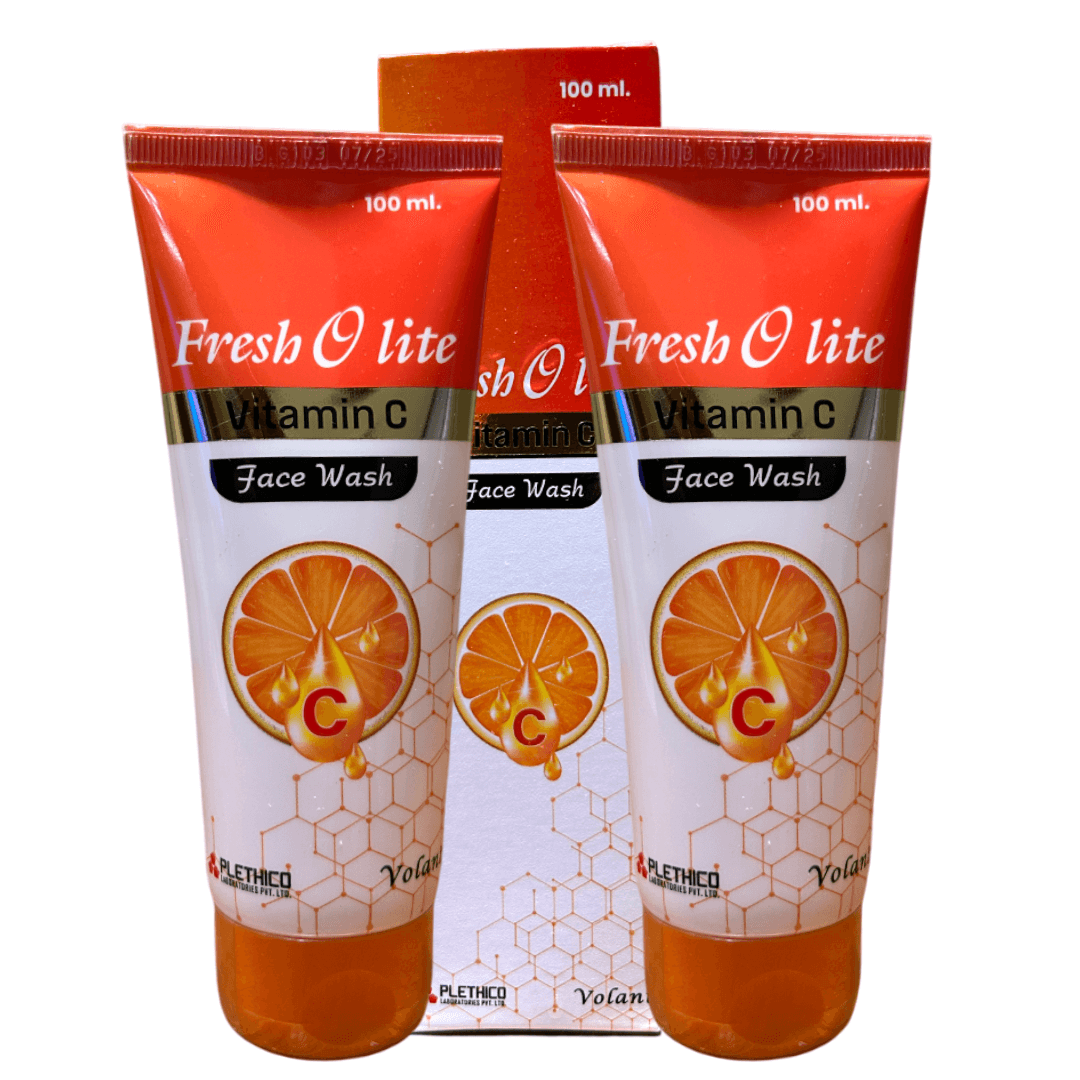
Rather than asking "chemical or natural?", the question that actually predicts whether a face wash will benefit your skin is: What is the pH? What surfactants does it use? What actives are present at effective concentrations? A face wash answering these three questions correctly — pH between 4.5 and 5.5, mild non-SLS surfactants, active ingredients listed in the upper half of the ingredient deck — will benefit your skin regardless of whether its active ingredients are synthetic or botanical. FreshOLite Vitamin C Face Wash with Orange Extracts answers all three.
The Science of Skin Cleansing — What Your Face Wash Is Actually Doing
How Surfactants Work at the Molecular Level
Cleansing works through the action of surfactants — molecules with a hydrophilic (water-attracting) head and a lipophilic (oil-attracting) tail. When a surfactant solution is applied to oily, dirty skin, the lipophilic tails insert into the oil and sebum on the skin's surface while the hydrophilic heads remain in the water phase. When rinsed, the surfactant molecules carry the oils — and everything dissolved or suspended in them, including makeup, sunscreen, pollution particles, and dead skin cells — away with the water. This is the fundamental mechanism of every face wash, chemical or natural.
The critical variable is not whether this happens — all surfactants do it — but how aggressively. More powerful surfactants, like SLS, insert into not just the external sebum and impurities but also the skin's intercellular lipids — the ceramides and fatty acids that make up the barrier's structural matrix. This is barrier disruption. Milder surfactants are more selective — they remove the external impurities while leaving the barrier lipids largely intact. The skin feels clean without feeling stripped.
The Skin Barrier — Why the Cleanser Must Protect It
The skin's outermost layer — the stratum corneum — functions as a selectively permeable barrier. It prevents excessive water loss from the body (transepidermal water loss, or TEWL) while resisting the entry of pathogens, allergens, and irritants from the environment. This barrier is composed of corneocytes (flattened, protein-filled cells) embedded in a lipid matrix of ceramides, cholesterol, and fatty acids — often described as a "brick and mortar" structure, where the cells are the bricks and the lipids are the mortar.
A damaged barrier — one depleted of these lipids — becomes leaky in both directions. Water escapes more easily, causing dehydration. Irritants enter more easily, causing inflammation and sensitivity. The barrier's ability to support a healthy microbiome is compromised, making the skin more susceptible to acne-causing bacteria and fungal overgrowth. In short, a compromised skin barrier is the root cause of many of the most common chronic skin complaints — and the most reliable route to a compromised barrier is a face wash that disrupts it twice daily.
Why Indian Skin Has Specific Cleansing Needs
Fitzpatrick types IV to VI skin — which describes most Indian skin — has higher melanocyte activity and a greater tendency toward post-inflammatory hyperpigmentation (PIH). Any inflammatory event — a pimple, a scratch, an allergic reaction, or even the chronic microinflammation caused by a barrier-disrupting face wash — is more likely to leave a visible dark mark in darker skin tones than in lighter ones. This means that in the Indian context, the bar for "gentle enough" cleansing is higher than in markets with predominantly lighter Fitzpatrick types. An irritating face wash does more visible long-term damage to Indian skin than to skin types less prone to post-inflammatory pigmentation.
Your Skin Problem — Chemical or Natural Solution?
The right face wash is not chemical or natural — it is the one that specifically addresses your actual skin concern. Here is how FreshOLite Vitamin C Face Wash addresses the four most common Indian skin complaints at the cleansing stage.
Excess Oil and Persistent Shine
India's humid climate drives sebum overproduction in most skin types. A face wash that cannot emulsify and remove excess sebum without stripping the barrier leaves the skin caught in a rebound oil cycle — producing even more sebum within hours of cleansing.
A vitamin C and orange extract formula disrupts the lipid bonds in sebum, lifting it cleanly from pores. Gentle surfactants remove oil effectively while plant-derived actives regulate sebaceous output over time, breaking the rebound cycle.
Dullness and Uneven Skin Tone
Pollution particles, dead skin cells, and oxidative stress from UV exposure accumulate on the skin's surface daily. In Indian cities, this happens faster than in most global climates. The result is the characteristic dull, grey-cast complexion that no amount of moisturiser can correct if the cleansing step is inadequate.
Vitamin C is the most evidence-backed topical brightening agent available. Applied as part of the cleansing step, it begins the process of neutralising free radicals and inhibiting melanin overproduction even before serums and treatments are applied.
Blackheads and Clogged Pores
Blackheads are oxidised sebum trapped in open pores — not dirt, despite popular belief. A face wash that only cleans the skin's surface without penetrating the follicle opening leaves the primary material of blackhead formation untouched. Most basic cleansers — natural or chemical — fail at this.
A face wash formulated with active brightening and pore-clarifying compounds works at the follicle level to loosen the oxidised sebum plug. With consistent use twice daily, pores visibly tighten as their contents are regularly removed before oxidation sets in.
Sensitivity and Post-Wash Tightness
The single most common complaint Indian consumers have about face washes — chemical or natural — is the tight, dry, uncomfortable feeling immediately after washing. This is not a sign of clean skin. It is a sign of barrier disruption — the face wash has removed not just impurities but the skin's natural moisturising factors and lipid matrix.
A pH-balanced formulation with mild, plant-based surfactants cleanses without stripping. The skin's acid mantle — its first line of defence — remains intact post-wash, leaving skin feeling clean but not tight, bare but not stripped.
Complete Skin Type Suitability Guide
Understanding how FreshOLite Vitamin C Face Wash interacts with each skin type ensures you use it at the right frequency and in combination with the right follow-up products for your specific profile.
Vitamin C and orange extract formula cuts through excess sebum effectively. Use twice daily. The brightening actives also combat the dull, sallow appearance common in persistently oily Indian skin.
Suitable once daily, preferably at night. The gentle formulation avoids aggravating dryness. Follow immediately with a moisturiser while skin is still slightly damp to lock in hydration.
Ideal for combination skin — the formula removes oil from the T-zone without over-drying the cheeks. The balanced pH ensures neither zone is left compromised post-cleansing.
The sulphate-free, mild surfactant base is appropriate for sensitive skin. Perform a patch test on the jawline before full use. Avoid aggressive scrubbing — use fingertip pressure only.
Vitamin C's antioxidant action reduces the inflammation that accompanies acne. Regular cleansing removes the sebum and dead skin debris that feed acne-causing bacteria, reducing breakout frequency over time.
Vitamin C supports collagen synthesis at the cleansing stage. Gentle surfactants avoid the stripping that accelerates visible ageing. Use once daily and follow with a rich moisturiser and SPF.
FreshOLite Vitamin C Face Wash — Complete Feature Breakdown
Vitamin C + Orange Extract. pH-Balanced. Sulphate-Reduced.
The answer to the chemical vs natural debate — a formula that uses the best of both.
Get FreshOLite Vitamin C Face Wash on Amazon →Vitamin C — The Brightening Active That Works at the Cleansing Step
Vitamin C — ascorbic acid and its derivatives — is the most extensively researched topical antioxidant in dermatological science. Its mechanisms are multiple and complementary: it neutralises free radicals generated by UV exposure and pollution before they can trigger the inflammatory cascade that leads to post-inflammatory hyperpigmentation; it inhibits tyrosinase, the enzyme responsible for converting tyrosine to melanin, thereby reducing dark spot formation at the biochemical source; and it acts as a cofactor in collagen synthesis, supporting the skin's structural integrity over time. What makes incorporating Vitamin C into the cleansing step particularly effective is the preparation it provides for subsequent skincare. A face wash containing active Vitamin C removes the layer of oxidative debris — dead cells, pollution particles, sebum oxidation products — that would otherwise interfere with the absorption of serums and moisturisers applied afterward. By the time active treatments reach the skin, they encounter a cleaner, more receptive surface, which amplifies their efficacy across the board.
For Indian skin specifically, Vitamin C addresses one of the most persistent and frustrating skin concerns in the subcontinent: hyperpigmentation. Whether caused by sun exposure, post-acne marks, or friction (common in darker skin tones), uneven pigmentation is significantly more visible and more stubborn in Fitzpatrick types IV and V — which describe the majority of Indian skin. Consistent Vitamin C use at the cleansing stage creates a continuous antioxidant environment that slows new pigmentation formation even before dedicated treatment products are applied. Over six to eight weeks, users consistently report a measurably more even, luminous skin tone.
Orange Extract — Natural Brightening and Follicle-Clearing Action
Orange extract brings a distinct and complementary set of actives to the formula. The peel and pulp of the orange contain concentrated flavonoids — hesperidin and naringenin being the most studied — that exhibit anti-inflammatory, antioxidant, and mild astringent properties at the skin's surface. These flavonoids reduce the microinflammation caused by pollution and UV exposure that, left unchecked, contributes to premature ageing and uneven texture in Indian skin exposed to year-round sun. Beyond the flavonoids, orange extract contains naturally occurring alpha-hydroxy acids — primarily citric acid — that perform mild exfoliating action at the skin's surface. Unlike synthetic AHAs used at high concentrations (which require careful pH management and can cause irritation), the natural citric acid in orange extract operates at lower concentrations that are compatible with daily use without sensitisation. Over time, this gentle exfoliating action smooths the skin's texture, reduces the appearance of enlarged pores, and improves the overall evenness of the skin tone without the peeling or downtime associated with clinical acid treatments.
The astringent properties of orange extract also contribute meaningfully to pore management — one of the primary concerns of Indian consumers with oily and combination skin types. By mildly toning the skin's surface and reducing the loose, open appearance of dilated pores (particularly prominent in the nose, chin, and forehead regions), orange extract provides an immediate post-wash tightening effect that feels and looks clean without the harsh stripping that causes barrier damage. This makes the formula effective for both the immediate sensory experience of cleansing and the longer-term goal of improving skin texture and tone.
pH-Balanced, Sulphate-Reduced Formulation — The Foundation That Most Face Washes Get Wrong
The skin's acid mantle — a thin film of sebum, sweat, and amino acids covering the surface — maintains a pH of approximately 4.5 to 5.5. This mildly acidic environment is not cosmetic; it is functional. It is the precise pH at which the skin's beneficial microbiome thrives, its enzymes operate correctly, and its barrier lipids maintain their integrity. Every point of pH increase above this range — moving toward the alkaline — measurably disrupts these functions. Most traditional face washes, including many marketed as "natural," have a pH of 7 to 9 due to their soap or high-surfactant base. The consequences of washing with an alkaline face wash are not immediately visible but accumulate over months of daily use. The beneficial bacteria that protect the skin from pathogenic overgrowth are suppressed. The ceramide-producing enzymes that rebuild the barrier after exposure become less efficient. The skin becomes progressively more reactive, more prone to irritation, and increasingly dependent on heavy moisturisers to compensate for the barrier deficit created by the cleansing step itself. This is the cycle that a pH-balanced formula interrupts.
FreshOLite's formulation maintains the skin's natural pH range through careful selection of mild, plant-derived surfactants rather than the sodium lauryl sulphate and sodium laureth sulphate (SLS/SLES) that drive aggressive foam production at the cost of barrier integrity. The reduced-sulphate approach creates a gentler cleansing action — less dramatic lather but significantly more effective at cleaning without stripping. For Indian consumers who have been conditioned to associate heavy foam with effective cleansing, this is an important paradigm shift: foam quantity correlates with surfactant aggression, not cleansing efficacy. A mild lather that leaves skin balanced is doing its job far more correctly than a dense foam that leaves skin tight and reactive.
Dual-Action Performance — Cleansing and Treatment in One Step
The practical reality of Indian skincare routines — particularly among working professionals in cities like Bengaluru, Pune, and Delhi — is that multi-step routines are aspirational but rarely sustained. A six-step morning routine sounds logical in a skincare guide but fails in the reality of a 6 AM alarm and a 7:30 AM commute. The skincare products that actually improve skin over time are the ones that fit realistically into the routine and get used every single day without exception. A face wash that functions as both a cleanser and an active brightening treatment addresses this directly. Every time you cleanse — which is non-negotiable regardless of how abbreviated your routine becomes — you are simultaneously delivering Vitamin C antioxidant protection, orange extract exfoliation, and pH-balancing cleansing action. You do not need to add a separate brightening step, a separate toner, or a separate exfoliating treatment to access these benefits. They arrive as part of the step you were already performing. This compounding of efficacy within an already-existing routine step is the most sustainable form of skincare improvement available.
The dual-action approach also makes the formula particularly valuable during India's more demanding seasonal periods. During the monsoon months — when humidity is high, pollution is exacerbated by moisture-laden air, and the combination of sweat and pollutants on skin is relentless — the need for effective but non-irritating cleansing is at its peak. Similarly, during the dry winter months in northern India, when the skin's barrier is under stress from cold, dry air, a cleanser that cleans without further compromising the barrier becomes essential rather than merely preferable. A formula that handles both the high-sebum and the high-sensitivity contexts without requiring the user to switch products is the kind of reliable tool that forms the backbone of a consistent, results-producing skincare routine.
Step-by-Step Cleansing Protocol for Maximum Results
How you use a face wash determines its results as much as the formula itself. Most people cleanse incorrectly — too briefly, with water that is too hot, or without adequate rinsing. Follow this protocol.
Wet Your Face Thoroughly with Lukewarm Water
Avoid hot water — it dilates capillaries and disrupts the lipid matrix of the skin barrier. Lukewarm water opens pores adequately for cleansing without causing unnecessary thermal stress. Splash the face generously to fully wet all areas including the jawline and hairline.
Dispense the Correct Amount — Less Than You Think
A coin-sized amount — approximately 2ml — is sufficient for a full face cleanse. More product does not increase efficacy; it increases the concentration of surfactants on the skin and makes thorough rinsing harder. Dispense onto fingertips, not directly onto dry skin.
Work Into Skin with Circular Fingertip Motions for 60 Seconds
Sixty seconds of active cleansing is the clinically recommended minimum for effective removal of pollution particles, sebum, and product residue. Most people cleanse for under 15 seconds. Work in small circular motions across the forehead, nose, cheeks, and chin — paying particular attention to the T-zone and the sides of the nose where sebum and blackhead material accumulate.
Rinse Completely — Check Hairline and Jawline
Incomplete rinsing is a common and underestimated cause of breakouts and irritation. Surfactant residue left on the skin continues to disrupt the barrier long after washing. Rinse for a minimum of 30 seconds, specifically targeting the hairline, jaw, and the creases beside the nose where product tends to accumulate.
Pat Dry — Never Rub
A clean cotton towel patted gently against the skin removes water without the mechanical friction that disrupts the top layer of skin cells. Rubbing with a towel is a surprisingly common source of microabrasion — cumulative skin barrier damage that becomes visible as redness, flaking, and sensitivity over time.
Apply Moisturiser Within 60 Seconds
The skin's moisture loss is highest in the minute immediately following cleansing, when the barrier's lipids are temporarily displaced and transepidermal water loss peaks. Applying moisturiser — or any subsequent actives — within 60 seconds of drying locks in residual hydration and immediately begins barrier restoration. Waiting five or ten minutes before the next step is a common routine mistake that costs measurable moisture with every wash.
What to Expect — A Realistic Results Timeline
Skin responds to cleansing changes faster than to treatment products because the cleanser affects every subsequent step in your routine. Here is an honest week-by-week account of what consistent use delivers.
If you are transitioning from a high-pH or sulphate-heavy face wash, the first few days may feel different — less foam, less squeaky-clean tightness. This is the skin recalibrating to cleansing that does not strip its barrier. It is not a sign of ineffectiveness; it is the absence of damage.
Sebum production begins to regulate as the barrier is no longer triggering rebound oil production to compensate for stripping. The skin's surface feels cleaner for longer after washing. Blackhead material begins to loosen with consistent twice-daily use.
Vitamin C's cumulative antioxidant and melanin-regulating effect begins to show. Skin tone appears more even. Existing dark spots begin to fade slightly at the edges. Dullness noticeably reduces — a consistent observation at the four-week mark across all skin types.
Pores appear visibly smaller due to consistent removal of sebum and dead cell buildup. Breakout frequency reduces as the follicle environment is kept cleaner. Skin tone is measurably more uniform. This is the point at which most users choose to make the formula their permanent daily cleanser.
Complete Buying Guide — How to Choose the Right Face Wash in India
Ignore the "chemical vs natural" label on the front of the packaging. Use this framework to evaluate any face wash by what actually determines its effect on your skin.
The Most Common Buying Mistakes Indian Consumers Make
The single most common mistake is choosing a face wash based on its fragrance experience. A face wash that smells pleasantly of lemon, rose, or sandalwood during use creates a positive sensory association that is entirely disconnected from its effect on skin health. Fragrance — synthetic or natural — is the leading cause of contact sensitisation in skincare. The more intensely fragrant a face wash is, the more fragrant ingredients it contains, and the higher the sensitisation risk with repeated daily use. A face wash for twice-daily use should be lightly or neutrally scented. Fragrance that produces a pleasurable sensory experience belongs in a perfume, not a formula applied to the face twice a day every day of the year.
The second most common mistake is selecting a face wash because it worked for a friend or family member with a different skin type. Skincare recommendations based on anecdote are essentially meaningless — what a face wash does to oily skin in Chennai's humidity is completely different from what it does to dry skin in Delhi's winter. The framework above — pH, surfactant type, active ingredients — applies universally and gives you the tools to evaluate a product for your specific skin, not your colleague's.
The third mistake is expecting a face wash alone to transform skin in one or two uses. A cleanser's job is to prepare the skin for treatment — removing the barriers to absorption, maintaining the pH and barrier integrity that allow actives to work. Its visible results — brighter tone, reduced breakouts, tighter pores — accumulate over weeks of consistent use. The consumers who are most disappointed by face washes are those who switch products every two to three weeks chasing immediate transformation, never staying with any formula long enough to complete a full skin turnover cycle.
The formula that answers chemical and natural — correctly.
FreshOLite Vitamin C Face Wash with Orange Extracts — built for Indian skin science.
Shop FreshOLite Vitamin C Face Wash on Amazon →Who Needs This Face Wash Most
Daily Commuters in Metro Cities
Delhi, Mumbai, Bengaluru pollution levels make pollutant-removal cleansing essential twice daily. A face wash with antioxidant action removes oxidative debris before it causes cumulative pigmentation damage.
High Sun Exposure Skin
UV exposure drives melanin overproduction and accelerates the formation of dark spots. Vitamin C at the cleansing stage provides antioxidant interception before oxidative stress becomes visible pigmentation.
Oily and Combination Skin Types
India's climate makes sebum management a year-round concern. A pH-balanced, sulphate-reduced formula removes excess oil without triggering the rebound sebum production that aggressive cleansers cause.
Blackhead and Large Pore Concerns
Consistent twice-daily cleansing with active orange extract keeps follicles cleared before sebum oxidises into blackheads. Pore appearance reduces measurably over six to eight weeks of consistent use.
Post-Acne Dark Spot Sufferers
Post-inflammatory hyperpigmentation is the most common skin concern among Indian adults under 35. Vitamin C inhibits melanin formation at the source, fading existing marks and preventing new ones.
Men Who Skip Skincare Entirely
A dual-action cleanser-plus-brightener reduces the total number of products required for clear, even skin. For men who will not use a serum or toner, a high-performance face wash delivers meaningful results in a single step.
Women Removing Makeup Daily
A gentle but effective face wash that thoroughly removes makeup residue without stripping protects the barrier from the compounding damage of daily makeup removal with harsh cleansers.
Anyone Whose Current Face Wash Leaves Skin Tight
Post-wash tightness is a warning sign, not a sign of cleanliness. It indicates barrier disruption. Switching to a pH-balanced, mild surfactant formula resolves this immediately and protects long-term skin health.
Face Wash Myths vs. Scientific Truth
Natural face washes are always gentler and safer than chemical ones
Natural does not equal gentle. Many natural ingredients — tea tree oil, citrus peel essential oils, menthol, witch hazel — are among the most common causes of contact dermatitis and skin sensitisation. A well-formulated "chemical" face wash with mild synthetic surfactants is frequently gentler and more barrier-compatible than a natural formula loaded with high-concentration plant essentials. The "natural = safe" equation has no scientific foundation.
A face wash that produces more foam cleans better
Foam quantity is determined by the concentration and type of surfactant — not by cleansing efficacy. SLS produces abundant, dense foam and is one of the most barrier-damaging ingredients in skincare. Mild, plant-derived surfactants produce less foam and clean the skin just as effectively — often more effectively in terms of what they leave behind (an intact barrier) versus what they remove (only impurities, not the skin's own protective factors).
You only need to wash your face once a day
Twice-daily cleansing — morning and evening — is the standard recommendation for most skin types in India's climate. The evening wash removes the day's accumulated sebum, pollution, sweat, and SPF. The morning wash removes overnight sebum production and prepares the skin for daytime actives and SPF. However, twice-daily washing only benefits the skin if the face wash used is gentle enough not to disrupt the barrier with repeated use.
Vitamin C in a face wash is washed off before it can work
Even brief contact time with Vitamin C delivers antioxidant benefit. The cleansing step creates a window of active antioxidant exposure that neutralises free radicals and begins the brightening process. More importantly, Vitamin C in a cleanser removes the oxidative debris — dead cells, pollution particulates — that would otherwise consume the Vitamin C in any serum or treatment applied afterward. It protects the efficacy of your entire subsequent routine.
Hot water opens pores for a deeper clean
Pores do not have muscles and cannot open or close. Hot water does not "open" pores — it strips the skin's lipid barrier, dilates surface capillaries (contributing to redness and broken capillaries over time), and temporarily softens the follicle material (which is the mechanism behind steam facials). Lukewarm water is sufficient for effective cleansing and far less damaging to the barrier. Cold water does not "close" pores either — it temporarily constricts capillaries and reduces the appearance of pores, but the structural reality of pore size is determined by genetics and sebum production, not water temperature.
If your skin feels tight after washing, it means it's clean
Post-wash tightness is a clinical marker of barrier disruption — the face wash has removed the skin's natural moisturising factors along with impurities. This is not clean skin; it is compromised skin. A well-formulated face wash leaves the skin feeling clean, fresh, and balanced — not tight, dry, or uncomfortable. Consistently chasing the tight sensation is one of the most reliable ways to develop chronic sensitivity, redness, and accelerated ageing over years of daily face washing.
Frequently Asked Questions About Chemical vs Natural Face Wash
Is FreshOLite Vitamin C Face Wash a chemical or natural face wash?
It is a hybrid formulation — it uses mild, plant-derived surfactants as its cleansing base alongside active natural extracts (orange extract) and a clinically established active (Vitamin C). The distinction between chemical and natural is less useful than understanding the specific ingredients and their concentrations. FreshOLite uses ingredients chosen for efficacy and skin compatibility rather than fitting neatly into either marketing category.
Can I use this face wash twice a day?
Yes. The formula is designed for twice-daily use — morning and evening. Its mild, pH-balanced formulation is gentle enough for consistent daily use without causing the cumulative barrier disruption that accompanies more aggressive cleansers used at the same frequency. Twice-daily cleansing in India's climate is recommended for most skin types to manage sebum, sweat, and pollution accumulation.
Will the Vitamin C in a face wash actually make a difference to my skin tone?
Yes — through two mechanisms. First, Vitamin C neutralises free radicals during the cleansing step, reducing the oxidative triggers that cause post-inflammatory hyperpigmentation. Second, it begins the process of tyrosinase inhibition — slowing melanin overproduction at the cellular level. The effects are cumulative and become visible at the four to six week mark with consistent twice-daily use. They are real and measurable, not marketing language.
Is this face wash suitable for men?
Completely. The formula addresses the primary concerns of male skin in India — excess sebum, pollution-driven dullness, post-shave irritation, and enlarged pores. Men's skin is on average 25% thicker and produces more sebum than women's skin, making regular effective cleansing particularly important. The oil-regulating and brightening properties are especially effective for the heavier sebum production typical of male skin.
Can people with sensitive skin use Vitamin C face wash?
Yes, with appropriate use. The Vitamin C in a gel-based face wash at wash-off concentrations is significantly less sensitising than leave-on Vitamin C serums, which can cause stinging in sensitive individuals. The sulphate-reduced formula further minimises irritation risk. Perform a patch test on the jawline first, use lukewarm rather than hot water, and avoid aggressive scrubbing. Most sensitive skin types tolerate the formula well with gentle application technique.
Does this face wash help with acne?
It contributes meaningfully to acne management through two routes: regular, effective removal of the sebum and dead skin debris that feed acne-causing bacteria reduces the conditions for breakout formation; and Vitamin C's anti-inflammatory action reduces the redness and swelling associated with active acne. It is not a dedicated acne treatment — it does not contain salicylic acid or benzoyl peroxide — but as part of a consistent cleansing routine, it measurably reduces breakout frequency and the post-acne dark marks that follow.
How long before I see results from using this face wash?
The immediate result — cleaner, less oily skin with balanced post-wash feel — is noticeable from the first use. Visible brightening and tone improvement typically become apparent between three and four weeks of twice-daily use. Significant pore improvement and substantial dark spot reduction are most visible at six to eight weeks. The skin responds to cleansing changes faster than it responds to treatment products because the cleansing step affects every subsequent product's performance.
Should I use a toner after this face wash?
A separate toner is optional, not essential, when using a pH-balanced face wash. The primary historical purpose of toners was to correct the high pH left by alkaline cleansers. A face wash that maintains the skin's natural pH range makes a pH-correcting toner redundant. A hydrating toner or essence with additional actives (hyaluronic acid, niacinamide) can still be beneficial as a layering step, but it is not a compensatory necessity after a well-formulated cleanser.
Is the face wash safe during pregnancy?
Vitamin C (ascorbic acid) and orange extract are considered safe for topical use during pregnancy by most dermatological guidelines. The surfactant base of a wash-off product, used as directed, presents minimal systemic exposure risk. However, as with any skincare product during pregnancy, it is best practice to confirm with your gynaecologist or dermatologist before beginning use, as individual health circumstances vary.
How does natural orange extract compare to synthetic Vitamin C in skincare?
They are complementary, not equivalent. Synthetic ascorbic acid (Vitamin C) provides a precise, stable concentration of the active molecule with well-documented mechanisms of action. Orange extract delivers a complex of natural flavonoids, carotenoids, and naturally occurring citric acid — a broader set of plant compounds with complementary antioxidant, anti-inflammatory, and mild exfoliating properties. The combination of both in a single formula provides a wider spectrum of benefit than either alone, which is precisely the rationale behind FreshOLite's formulation approach.
Stop Debating. Start Cleansing Correctly.
The chemical vs natural face wash question is the wrong question. The right question is whether your cleanser maintains your skin's pH, protects its barrier, and delivers active ingredients at effective concentrations. FreshOLite Vitamin C Face Wash with Orange Extracts answers all three — with a formula designed for Indian climate, Indian skin types, and the real demands of daily urban life.
Buy FreshOLite Vitamin C Face Wash on Amazon →All Skin Types · pH-Balanced · Sulphate-Reduced · Vitamin C + Orange Extract · Free Delivery Available