Face Wash for Acne
vs Oily Skin —
What's Actually Better for You?
Most Indians are using the wrong face wash — not because the product is bad, but because acne and oily skin are different conditions requiring different active ingredients. This guide draws the line clearly so you stop guessing.
The Acne vs Oily Skin Confusion — Why Most People Get This Wrong
Walk down the face wash aisle at any chemist in India and you will find two adjacent categories of product: face washes labelled for acne, and face washes labelled for oily skin. They often look similar. They frequently share some of the same ingredients. And for most Indian consumers standing in that aisle, the question of which one to buy is either answered by brand loyalty, price, or a packaging claim that sounds vaguely relevant to their skin problem. This is precisely why most people are using the wrong face wash — and why so many people cycle through product after product without seeing meaningful results.
The confusion is understandable. Acne and oily skin are deeply connected — excess sebum production is a primary driver of acne formation — but they are not the same condition. You can have severely oily skin without ever developing acne. You can have acne on dry or normal skin. And the most common presentation — oily skin that is also chronically acne-prone — requires a face wash that addresses both conditions with different active ingredient mechanisms. Using an oily-skin face wash when your primary complaint is acne is like taking a fever reducer for an infection: it addresses a symptom while the underlying problem continues unabated.
The Indian context makes this distinction even more consequential. India's climate — high ambient temperatures across most of the country for most of the year, extreme humidity in coastal cities, intense UV radiation at all latitudes — creates conditions that amplify both oiliness and acne. Sebaceous glands produce more oil in heat. Sweat mixed with sebum creates an ideal medium for P. acnes bacterial proliferation. UV radiation accelerates the oxidation of follicular sebum into comedones. Hard water deposits minerals on the scalp and face that disrupt the skin's acid mantle. Pollution from Indian cities — among the worst in the world for PM2.5 particulates — lands on the face daily and oxidises into pore-clogging compounds. If your face wash is not specifically equipped to address these environmental realities, you are fighting these factors with inadequate tools.
Indian skin types add another dimension. The prevalence of darker Fitzpatrick skin tones across the subcontinent means that post-inflammatory hyperpigmentation — the dark marks left by acne lesions — is dramatically more visible and persistent than in lighter skin types. A face wash designed for Indian acne-prone skin should therefore address not just active breakouts but also the prevention of the hyperpigmentation that follows them. This is where Vitamin C becomes a relevant active in face wash formulation — and where the simple oily-vs-acne binary proves insufficient as a framework.
This guide cuts through the confusion with precision. You will understand the science of how oily skin and acne are separately generated by your skin's biology, how the active ingredients in face washes address these mechanisms differently, how to read an ingredient list to determine whether a product will actually work, and which type of face wash — or which combination of actives — is correct for your specific skin presentation. If you have combination skin, if you live in a humid coastal city, if you are dealing with hormonal adult acne, or if you have simply been frustrated by face washes that promised results and underdelivered — this guide is the resource you need to make an informed, science-backed decision.
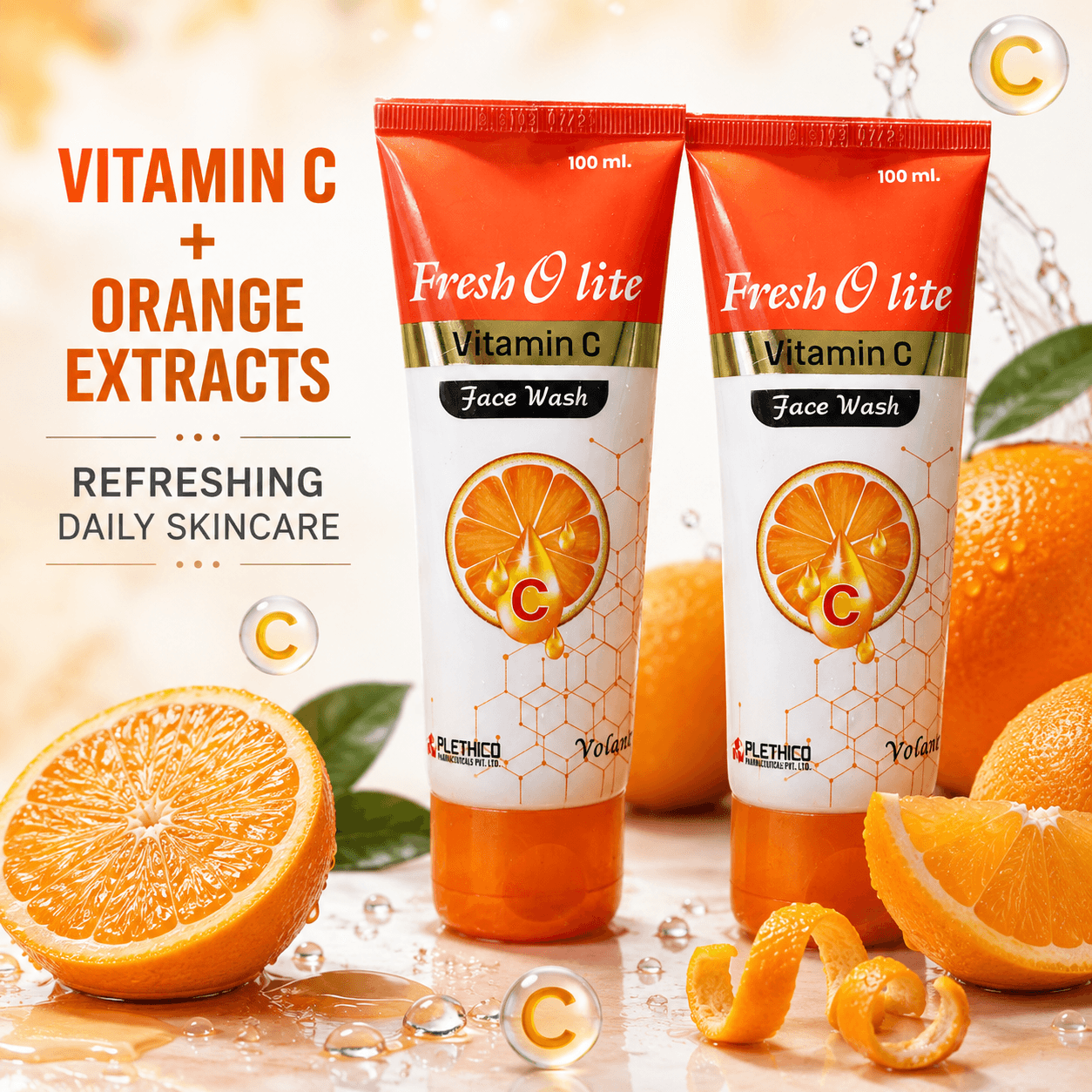
We will also examine FreshOLite Face Wash — a formula designed specifically for Indian oily and acne-prone skin that combines salicylic acid, niacinamide, and Vitamin C in a pH-balanced, non-stripping base — to illustrate concretely what a well-formulated dual-action product looks like and how it performs against the benchmarks established in this guide.
The Science of Oily Skin — Why Your Sebaceous Glands Overproduce
What Sebum Actually Is and Why Your Skin Makes It
Sebum is not simply "oil" in the colloquial sense. It is a complex lipid mixture secreted by sebaceous glands — small structures attached to hair follicles throughout the face, scalp, chest, and back. Its composition includes triglycerides, wax esters, squalene, free fatty acids, and cholesterol in specific ratios that vary between individuals and skin types. In its correct quantity and composition, sebum is biologically essential: it lubricates the skin surface, prevents transepidermal water loss, contributes to the acid mantle that protects against pathogens, and delivers fat-soluble antioxidants to the skin's surface.
Oily skin — clinically termed "seborrhoea" — occurs when sebaceous glands produce sebum at a rate that exceeds what the skin surface can effectively utilise or shed. The excess accumulates on the skin's surface, creating the visible sheen and tactile greasiness that defines oily skin. The sebaceous glands are regulated by androgens — testosterone and its more potent derivative, dihydrotestosterone (DHT) — which stimulate gland activity and sebum production. This is why sebum production peaks during puberty when androgen levels surge, why men (with higher testosterone) consistently have oilier skin than women, and why hormonal events (menstrual cycles, polycystic ovarian syndrome, stress-induced cortisol elevation that stimulates adrenal androgen production) affect oiliness in women.
Environmental Amplifiers in the Indian Context
Genetic predisposition to high sebum production is amplified significantly by environmental factors specific to the Indian climate. Ambient temperature is the most direct: sebaceous gland secretion rate increases proportionally with skin surface temperature. A person with moderate sebum production in a temperate 22°C climate may have severely oily skin in Chennai's 38°C summer heat. The body's thermoregulation mechanism also increases sweat production in heat — and sweat mixed with sebum on the skin surface creates an emulsified layer that feels even more uncomfortable and oily than either component alone.
Humidity compounds the issue by slowing the evaporation of this sweat-sebum mixture from the skin surface. In coastal cities like Mumbai, Kochi, and Chennai, where humidity consistently exceeds 80%, sebum lingers on the skin rather than being naturally dispersed — creating a persistent film that attracts pollution particulates and accelerates the oxidation of sebum components into the altered, comedogenic forms that block follicles.
The Rebound Oiliness Trap
The most common mistake made by oily-skinned individuals in India is aggressive over-cleansing: using high-foaming, harsh surfactant face washes two, three, or even four times daily in an attempt to remove visible oil. This creates a physiological trap. The harsh cleansers strip the skin's acid mantle and remove not just excess sebum but the baseline sebum level necessary for normal skin function. The sebaceous glands, detecting this deficit, increase their secretion rate to compensate — producing the same or greater amount of sebum than before, but on a disrupted, irritated skin surface that is now also dehydrated. The result is skin that is simultaneously oily and dry — a presentation dermatologists call "combination skin" but which is often simply over-stripped oily skin in disguise. Breaking this cycle requires using a gentler, pH-correct face wash at the appropriate frequency and always following with a non-comedogenic moisturiser.
How Acne Actually Forms — The Four-Step Mechanism
Step 1: Follicular Hyperkeratinisation
Acne begins not with bacteria — as commonly assumed — but with a change in the behaviour of skin cells lining the follicle wall. In acne-prone skin, the skin cells inside the follicle (keratinocytes) shed abnormally: instead of loosening and being carried out of the follicle by sebum flow, they clump together and adhere to the follicle wall. This clumping — called follicular hyperkeratinisation — is the initial event that creates the microcomedo: a microscopic plug of compacted dead skin cells and sebum at the follicle's narrowest point, invisible to the naked eye but already blocking normal sebum drainage.
Step 2: Comedone Formation
As the microcomedo grows — fed by continuing sebum production that cannot drain past the initial plug — it becomes a macrocomedo: the visible blackhead or whitehead. A blackhead (open comedone) forms when the follicle opening remains open: the sebum-dead cell mixture is exposed to air, and the unsaturated fatty acids and melanin in the mixture oxidise, turning the characteristic dark colour. Contrary to popular belief, this dark colour is not dirt — it is chemically altered sebum. A whitehead (closed comedone) forms when the follicle opening is entirely sealed by the plug, keeping the contents white and unaerated beneath the skin surface.
Step 3: Bacterial Proliferation
Cutibacterium acnes (formerly Propionibacterium acnes) — the bacterium primarily associated with acne — is a normal resident of healthy skin, present in everyone. It becomes pathogenic only under specific conditions: the anaerobic, sebum-rich environment inside a blocked follicle. C. acnes metabolises sebum fatty acids as its food source, proliferating rapidly inside the sealed follicle. As a byproduct of this metabolism, it produces inflammatory substances including free fatty acids, proteases, and lipopolysaccharides that begin to damage the follicle wall and trigger the immune response.
Step 4: Inflammation and Lesion Formation
The immune system detects the bacterial metabolic byproducts and mounts an inflammatory response — directing immune cells (neutrophils) to the follicle site. This inflammatory cascade is what causes the redness, swelling, heat, and pain of an active pimple. If the follicle wall ruptures under the pressure of this inflammation, the contents — dead cells, sebum, bacteria, and immune cells — spill into the surrounding dermis, causing the deeper, more painful nodules and cysts of severe acne. Post-inflammatory hyperpigmentation (the dark mark left after healing) occurs as the melanocytes adjacent to the lesion site overproduce melanin in response to the inflammation signal.
This four-step mechanism — follicular plugging, comedone formation, bacterial growth, inflammation — explains precisely why salicylic acid (which addresses steps 1 and 2 by dissolving the plug) is the most important active in an acne face wash. It targets the initiating event, preventing the cascade from progressing to the inflammatory stages that cause pain, scarring, and hyperpigmentation. By understanding these steps, you understand why an oily-skin face wash without BHA — which removes surface oil but does not enter the follicle — addresses only the environmental conditions of acne without interrupting its formation mechanism.
Core Differences: Acne vs Oily Skin Face Wash Formulas
The Fundamental Distinction
An oily skin face wash is a surface cleanser with sebum-regulating additives. Its primary function is to remove excess oil from the skin's surface and, with appropriate active ingredients like niacinamide, gradually reduce the sebaceous gland's output rate over time. It operates at the skin's surface — the stratum corneum — and does not penetrate meaningfully into the follicle where comedone formation begins.
An acne face wash is a surface cleanser with follicular therapeutics. In addition to surface cleansing, it contains oil-soluble active ingredients — principally salicylic acid (BHA) — capable of penetrating the sebum inside the follicle and acting within the follicular canal itself. This is not a marginal difference. It is the difference between cleaning the outside of a blocked pipe and dissolving the blockage from inside.
The most effective product for someone with both oily skin and acne is a formula that performs both functions: surface oil control (niacinamide, gentle surfactants) and follicular clearing (salicylic acid). This dual-action approach is what FreshOLite Face Wash is formulated to deliver — and it is the category that most Indian oily-and-acne-prone skin genuinely needs rather than choosing one function at the expense of the other.
What Happens When You Use the Wrong One
Using an oily skin face wash when you have active acne produces partial results: surface oil is controlled, skin feels temporarily cleaner and less greasy, but the follicular plugs that generate comedones remain intact and continue developing. You manage the environment that worsens acne without addressing the formation mechanism — a maintenance approach rather than a treatment.
Using an acne face wash when you have purely oily skin (no active acne) is generally harmless and often beneficial — the BHA performs preventive follicular maintenance that reduces the probability of comedone formation even if breakouts are not currently present. The mild exfoliating effect also improves skin texture and pore appearance. The only consideration is ensuring the acne formula is not overly drying for your oil level — a well-formulated one should not be.
Using either without following it with a non-comedogenic moisturiser — the single most common omission in Indian skincare routines — guarantees suboptimal results from either formula. The moisturiser is not optional.
Ingredient Decoder — What to Look For and What to Avoid
Ingredients That Actually Work
Salicylic Acid (BHA, 0.5–2%): The gold standard acne active. Oil-soluble, penetrates follicles, dissolves comedone plugs, exfoliates the follicle wall, and delivers mild anti-inflammatory activity. Effective only when present at a meaningful concentration — 0.5% minimum for preventive action, 1–2% for active acne treatment — and in a formulation pH below 4.5 where its keratolytic activity is maintained.
Niacinamide (2–5%): Multifunctional vitamin B3 derivative. Reduces sebum production at the glandular level, strengthens the moisture barrier, reduces pore appearance, delivers anti-inflammatory action, and inhibits melanin transfer for hyperpigmentation reduction. Compatible with nearly all other actives and suitable for all skin types including sensitive.
Vitamin C (Ascorbic Acid or Stabilised Derivatives, 5–15%): Antioxidant that neutralises free radical damage from UV and pollution, inhibits melanin production to fade post-inflammatory hyperpigmentation, and stimulates collagen synthesis that supports skin repair after acne lesions heal. Particularly valuable for Indian skin tones where PIH is significantly more pronounced and persistent.
Zinc PCA: Zinc ion compound that reduces sebum production through inhibition of 5-alpha-reductase (the enzyme that converts testosterone to the more potent DHT that drives sebaceous gland activity). Synergistic with niacinamide for sebum regulation and adds mild antibacterial properties relevant to acne management.
Ingredients to Avoid in Oily/Acne Formulas
Sodium Lauryl Sulphate (SLS) as Primary Surfactant: Highly irritating surfactant that disrupts the acid mantle and moisture barrier. Creates abundant lather but strips the skin too aggressively for oily or acne-prone skin — triggering the rebound oil production cycle.
Fragrance (listed as "parfum" or "fragrance"): Common sensitiser and allergen. Adds zero skin benefit and significant irritation risk for already-compromised acne-prone skin.
Comedogenic Oils (Coconut, Cocoa Butter, Wheat Germ): Some face washes include these as conditioning agents. On acne-prone skin, they contribute to follicular occlusion — directly counterproductive to the cleanser's function.
High-Concentration Ethanol/Alcohol: When listed in the top half of an ingredient deck, ethanol is a primary drying agent. It creates the illusion of oil control through dehydration but triggers compensatory sebum overproduction and disrupts barrier function.
Complete Skin Type Suitability Guide
Your skin type determines which formula emphasis you need — and how you should use it. Here is the complete suitability breakdown for each major skin presentation.
A sebum-control face wash is precisely calibrated for this presentation. Focus on niacinamide and mild surfactants that regulate oil without causing dryness or triggering compensatory overproduction.
An acne-targeted formula is the correct primary cleanser. Consistency matters more than intensity — twice-daily use of a BHA-containing wash outperforms weekly harsh treatments by maintaining a clear follicular environment continuously.
Dual-action formulas work best for combination skin — addressing the oily T-zone while not over-drying the drier cheek zones. A balanced pH and moderate surfactant concentration is essential for this skin type.
Use an acne face wash only on breakout-prone zones (spot application or targeted rinse) and avoid over-cleansing. Over-washing dry acne-prone skin worsens barrier function, which can paradoxically worsen acne.
Look for formulas with lower concentrations of active acids and fragrance-free profiles. Avoid foaming agents like SLS. Niacinamide is particularly suited for sensitive skin as it addresses oiliness without irritation.
Aging skin loses elasticity and barrier function. Harsh acne formulas accelerate this. Choose formulas with low acid concentrations and supplementary hydrating ingredients to preserve skin integrity while addressing breakouts.
Your Skin Problem — The Specific Solution
Match your primary complaint to the solution mechanism — and understand why the right active ingredient matters for your specific presentation.
Chronic Shine and Excess Sebum
By midday your T-zone is visibly oily regardless of how thoroughly you washed in the morning. Makeup slides off, pores look enlarged, and your skin feels perpetually greasy — particularly in humid Indian weather between March and October.
A sebum-regulating face wash with niacinamide and gentle surfactants removes excess surface oil without triggering the rebound overproduction that harsh cleansers cause. The skin learns to produce less oil when it stops being chronically stripped.
Persistent Breakouts and Pimples
Whiteheads, blackheads, and inflamed papules cluster around the forehead, chin, and nose. They clear temporarily but cycle back within days. This pattern indicates a combination of clogged follicles, bacterial activity, and inflammation — not just oil.
An acne-targeting formula addresses all three root causes: keratolytic acids (salicylic acid) exfoliate inside the follicle, antibacterial agents reduce P. acnes activity, and anti-inflammatory botanicals calm redness and swelling at the lesion site.
Visibly Enlarged, Clogged Pores
Pores on the nose, cheeks, and chin appear stretched and filled with oxidised sebum (blackheads) or white keratin plugs (whiteheads). In India's pollution-heavy urban environments, these blocked pores accumulate particulate matter that accelerates oxidation and comedone formation.
Regular use of a BHA-containing face wash dissolves the sebum and dead cell mixture inside each pore from the inside out — the only mechanism that actually reduces pore congestion rather than temporarily masking it.
Oily and Acne-Prone Simultaneously
This is the most common and most frustrating pattern: high sebum production that consistently leads to breakouts, meaning both problems are present and each makes the other worse. Over-stripping to control oil creates microtears that harbour bacteria; excess oil creates the anaerobic environment P. acnes thrives in.
A dual-action formula that controls sebum and treats active acne simultaneously is the only intelligent approach for this presentation. Products addressing only one of these factors leave the other unmanaged — ensuring the cycle continues indefinitely.
FreshOLite Face Wash — Complete Feature Breakdown
Salicylic Acid · Niacinamide · Vitamin C · pH Balanced for Indian Skin
A dual-action formula that controls oiliness and treats acne simultaneously — built for India's climate and skin types.
Get FreshOLite Face Wash on Amazon — Shop Now →Salicylic Acid — The Only Ingredient That Clears Inside the Pore
Salicylic acid is a beta-hydroxy acid (BHA) — and the single most important distinction between an acne face wash and a generic oily skin face wash is whether it contains this ingredient in a meaningful concentration. Unlike alpha-hydroxy acids (AHAs such as glycolic or lactic acid), salicylic acid is oil-soluble. This chemical property is the entire basis of its effectiveness: because it dissolves in oil rather than water, it can penetrate into the sebum-filled interior of a hair follicle — the precise location where acne begins — rather than acting only on the skin's surface. Once inside the follicle, salicylic acid performs two simultaneous functions. First, it dissolves the plug of hardened sebum and dead skin cells that is blocking the follicle opening — the formation that becomes a blackhead when oxidised by air exposure, or a whitehead when sealed beneath the skin's surface. Second, it exfoliates the follicle wall itself, reducing the rate at which dead skin cells accumulate inside the pore and re-form the blockage after treatment. This dual mechanism is what makes BHA the gold standard active in acne cleansers — not just unclogging existing pores, but slowing the rate at which they re-clog.
For Indian skin in particular, salicylic acid's compatibility with the skin's natural oil chemistry makes it especially effective. India's climate produces a skin environment where sebum production is chronically elevated — tropical heat increases sebaceous gland activity, and urban pollution accelerates the oxidation of sebum into the sticky, pore-blocking substance that feeds comedone formation. A salicylic acid face wash used consistently twice daily creates a continuously maintained, clear follicular environment that prevents the accumulation cycle from completing. The visible result — fewer blackheads, fewer whiteheads, smoother pore texture — is the direct product of this sustained inside-the-pore cleansing action that no other topical ingredient replicates.
Niacinamide — Sebum Regulation Without Stripping
Niacinamide — Vitamin B3 — is the most versatile and universally compatible active ingredient in modern skincare formulation. Its relevance to the acne-versus-oily-skin face wash debate is profound because it addresses the mechanism that connects both conditions: excess sebum production. Niacinamide reduces sebum output by inhibiting the transfer of melanosomes from melanocytes (relevant for hyperpigmentation) but, more importantly for our purposes, by regulating the activity of sebaceous glands through the normalisation of lipid production pathways in the skin's epidermis. What makes niacinamide uniquely valuable is its multi-functionality within a single molecule. In the context of face wash formulation, it simultaneously reduces oil production, strengthens the skin's moisture barrier (preventing transepidermal water loss that triggers compensatory oil production), reduces the appearance of enlarged pores by improving the surrounding skin's elasticity, and delivers meaningful anti-inflammatory action that calms the redness and swelling of active acne lesions. This is not a list of theoretical benefits from in-vitro research — niacinamide's efficacy in all of these categories is supported by extensive clinical trial data.
The barrier-strengthening function of niacinamide is particularly important in the Indian context. Many consumers in India over-cleanse — using harsh, high-foaming surfactants multiple times daily in response to the sweating and oiliness caused by heat and humidity. This over-cleansing strips the skin's acid mantle and disrupts its moisture barrier, creating a paradox: the skin produces even more oil in response to being repeatedly stripped. Niacinamide, when present in a well-formulated face wash, counteracts this cycle. It reduces oil production at the sebaceous gland level while simultaneously rebuilding the barrier that signals to the skin that it no longer needs to compensate with excess sebum. The result is a gradual normalisation of the skin's oil production over weeks of consistent use — not just temporary surface dryness that reverses within hours.
Vitamin C — Brightening, Antioxidant Protection, and Acne Scar Fading
Vitamin C — ascorbic acid and its derivatives — occupies a specific but crucial role in a face wash designed for oily and acne-prone skin in India. Its inclusion addresses a problem that is frequently overlooked in the oily-skin conversation: post-inflammatory hyperpigmentation (PIH). This is the dark mark left behind after an acne lesion heals — the flat, discoloured patch that can persist for months or years after the active breakout has resolved. PIH is significantly more pronounced in Indian skin tones due to higher baseline melanin levels, meaning that the skin's response to inflammation consistently produces more visible darkening than in lighter skin types. Vitamin C inhibits the enzyme tyrosinase — which catalyses the final step in melanin production — at the site of post-inflammatory response. Applied consistently in a face wash formulation, it reduces the intensity and duration of the hyperpigmentation that follows each breakout, gradually evening skin tone while active treatment ingredients work on preventing new lesions. This combination approach — treating both the active acne and its aftermath simultaneously — is far more effective than addressing only one dimension.
The antioxidant function of Vitamin C adds another layer of relevance for Indian urban skin. Free radical damage from UV radiation and pollution is among the primary accelerants of sebum oxidation — the process that turns liquid sebum inside follicles into the sticky, hardened plug that forms blackheads. Vitamin C's antioxidant activity partially neutralises this oxidation process at the skin surface, reducing the rate of comedone formation in addition to its brightening effects. In cities with high PM2.5 pollution levels — including Delhi, Bengaluru, and Mumbai — this antioxidant protection is not a cosmetic luxury but a functionally important barrier against the skin damage that urban air quality consistently causes.
pH-Balanced, Non-Stripping Formulation — Why the Base Matters as Much as the Actives
The active ingredients in any face wash are only as effective as the formulation that delivers them — and the single most important formulation parameter for both oily and acne-prone skin is pH. The skin's natural surface pH is mildly acidic, sitting between 4.5 and 5.5 on the pH scale. This acid mantle serves as the skin's first line of defence: it supports the healthy bacterial communities that prevent pathogen overgrowth, maintains the tight junctions between skin cells that constitute the moisture barrier, and creates the chemical environment in which key enzymes responsible for natural exfoliation and repair function optimally. Many face washes — including several widely sold brands in India — are formulated at a significantly higher (more alkaline) pH, often between 7 and 9. This is partly a legacy of soap-based formulations and partly a manufacturing convenience. The consequence is significant: an alkaline cleanser disrupts the acid mantle on every wash, temporarily raising the skin's surface pH. In this alkaline window, the protective bacterial communities are suppressed, barrier function is compromised, and the skin's natural repair mechanisms are impaired. For acne-prone skin, this disruption is directly counterproductive — it creates the vulnerable, permeable skin environment that P. acnes bacteria exploit.
A properly pH-balanced face wash — formulated between 4.5 and 5.5 to match the skin's natural range — cleans the skin without disrupting this protective environment. The active ingredients (salicylic acid, niacinamide, Vitamin C) work most effectively within this pH range anyway, since their chemical activity is pH-dependent. This means a correctly pH-balanced formula delivers both better cleansing outcomes and more effective active ingredient performance than an alkaline alternative, even when the ingredient lists look superficially similar. This is the detail that separates a well-engineered face wash from a marketing-led product that lists impressive actives but underdelivers due to a fundamentally flawed base formulation.
Step-by-Step Cleansing Protocol for Oily and Acne-Prone Skin
How you wash your face determines whether your face wash delivers its active ingredients effectively — or simply rinses away before they can work. Follow this protocol precisely.
Wet Your Face with Lukewarm Water
Temperature matters. Hot water strips the skin's natural oils aggressively, triggering compensatory sebum overproduction. Cold water does not open the pore sufficiently for effective cleanser penetration. Lukewarm water — warm enough to be comfortable, not hot — is the optimal temperature for face washing. It softens the sebum inside pores without damaging the barrier.
Apply a Coin-Sized Amount to Your Fingertips
Dispensing more product does not improve cleansing — it wastes formulation and leaves residue. A 20-paise coin-sized amount is sufficient for the entire face. Apply to fingertips, not directly to the face, to control distribution. More product creates more lather, which feels effective but isn't — the cleansing happens through the surfactant chemistry, not through physical foam volume.
Massage in Circular Motions for 60 Full Seconds
Most people wash their face for 8–15 seconds. This is insufficient for active ingredients like salicylic acid to perform their function. A minimum of 60 seconds of gentle circular massage — using fingertips, not nails or a harsh cloth — allows the BHA time to begin dissolving follicular buildup. Focus on the T-zone, around the nose, and forehead where congestion is heaviest.
Pay Special Attention to the Jawline and Hairline
These are the most commonly missed zones in face washing — and also among the most acne-prone in Indian adults, particularly those experiencing hormonal breakouts. The jawline is where androgen-influenced acne most frequently presents. The hairline accumulates hair product residue, sweat, and sebum that directly contribute to forehead breakouts.
Rinse Thoroughly with Cool Water
Cool water on rinsing — after the lukewarm wash — helps to close the follicle opening after cleansing, temporarily reducing the rate of new debris entry. Rinse until there is absolutely no slippery residue remaining. Incompletely rinsed cleanser is alkaline, barrier-disrupting, and one of the most overlooked causes of persistent irritation and purging in face wash users.
Pat Dry Gently and Apply Moisturiser Within 60 Seconds
Pat — never rub — with a clean towel. Friction from rubbing breaks down the newly cleaned follicle opening and can transfer bacteria from the towel surface. Apply a non-comedogenic moisturiser within 60 seconds of drying: this is the window during which the skin is most receptive to hydration. Skipping moisturiser after face wash is a critical error that contributes to the dehydration-to-oiliness cycle.
Results Timeline — What to Expect Week by Week
Managing expectations accurately is as important as choosing the right product. Here is an honest, biologically grounded timeline for what consistent twice-daily use delivers.
Active ingredients like salicylic acid may accelerate the surfacing of pre-existing congestion. This is purging — existing blocked pores clearing faster than they would naturally. It is not a negative reaction. Skin may feel slightly drier or more sensitive than usual as it adapts to the new cleansing pH and active ingredients.
Midday shine reduces noticeably. The skin's surface feels cleaner for longer after washing. Active comedones may still be present, but new formation rate begins to decrease. Pores on the nose and forehead may look temporarily more visible as the salicylic acid begins dissolving the plugs — this is the clearing process beginning.
New pimples appear less frequently. Existing lesions begin healing faster with a more consistent cleansing environment. Redness around active spots visibly reduces. The skin's texture begins to feel smoother, particularly in the T-zone. This is the point where most people who quit early abandon a product that was actually beginning to work.
Blackheads noticeably reduce on the nose and chin. Skin tone begins to even as Vitamin C addresses post-inflammatory marks. Pores appear smaller as the surrounding skin tightens with reduced congestion. Oiliness is visibly controlled throughout the day without the skin feeling tight or dry — the balanced formulation becomes apparent.
The skin reaches its new baseline: fewer breakouts, regulated oil, visibly refined pores, and a more even complexion. This is not a temporary improvement — it reflects a genuinely improved follicular environment maintained by consistent cleansing. Users who reach this milestone and continue see cumulative improvements in skin texture and tone.
Complete Buying Guide — How to Choose the Right Face Wash in India
The face wash category in India is saturated with products whose claims far outpace their formulation quality. Here is the objective framework for separating products that work from products that are marketed well.
The Most Common Buying Mistakes in India
The most pervasive buying error among Indian consumers purchasing face wash for oily or acne-prone skin is selecting products based on the intensity of the cleansing sensation rather than the intelligence of the formula. Products that cause a strong tightening sensation post-wash — a feeling often interpreted as "very clean" — are typically causing significant barrier disruption. This sensation is your skin's acid mantle reporting damage, not your pores reporting satisfaction. A correctly formulated face wash for oily skin should leave the skin feeling clean and comfortable, not tight or squeaky.
The second common mistake is purchasing based on brand familiarity without reading the ingredient list. Several of India's most widely recognised and advertised face wash brands are formulated with primary surfactants that are inappropriate for daily use on acne-prone skin, and list their "active" ingredients at concentrations too low to be therapeutically meaningful. The advertising budget of a product and its ingredient quality are entirely unrelated. Read the label. If niacinamide or salicylic acid appears in the bottom third of a 20-ingredient list, it is present as a marketing ingredient rather than an active therapeutic ingredient.
The third mistake is abandoning a correctly chosen face wash too early. The timeline section above establishes that meaningful visible results from a BHA face wash are typically not visible until week two at the earliest, and full results require six to twelve weeks of consistent use. Most consumers abandon products between the second and third week — often precisely when the purging phase is completing and the clearing phase is beginning. Patience, in this case, is a clinical instruction, not just advice.
The right formula for Indian oily and acne-prone skin.
FreshOLite Face Wash — salicylic acid, niacinamide, and Vitamin C in a pH-balanced base built for daily use.
Shop FreshOLite Face Wash on Amazon →Who Needs This Face Wash Most
Urban Professionals in High-Pollution Cities
Delhi, Mumbai, and Bengaluru residents face PM2.5 particulates that oxidise sebum and clog pores daily. A face wash with antioxidant Vitamin C and BHA is essential for pollution-exposed skin.
Those With Chronic T-Zone Oiliness
If your forehead, nose, and chin are visibly shiny by midday regardless of what you use, you need sebum-regulation — not just cleansing. Niacinamide-containing formulas address this at the glandular level.
Adult Acne Sufferers (25–40 Age Group)
Adult hormonal acne — increasingly common in India due to stress, irregular sleep, and processed food consumption — responds best to consistent BHA treatment combined with a skin-barrier-respecting cleanser base.
Women With Hormonal Breakouts
Cyclical jawline and chin breakouts linked to the menstrual cycle require a consistent twice-daily acne cleanser that maintains a clear follicular environment through hormonal fluctuation periods.
Men With Post-Shave Acne
Shaving creates micro-abrasions that allow bacteria to enter the skin. A BHA face wash used after shaving reduces infection of these entry points — the primary cause of post-shave pimples on the neck and chin.
Students and Young Adults (16–24)
This age group experiences peak sebum production and acne prevalence. Establishing a consistent face wash routine in this window prevents the progressive scarring and pigmentation that accumulates from untreated breakouts.
Those in Hot, Humid Indian Climates
Year-round heat in cities like Chennai, Hyderabad, and Kochi creates continuous sweat-sebum mixing on the skin surface that accelerates both oiliness and acne. Twice-daily cleansing is the baseline requirement, not the intensive option.
People Who Have Tried Multiple Products Without Results
If face washes haven't worked, the likely reason is pH incompatibility, insufficient active concentration, or barrier damage from over-stripping. A properly formulated pH-balanced BHA wash typically produces results where others have failed.
Face Wash Myths vs Scientific Truth
The more a face wash foams, the better it cleans
Foam quantity is entirely determined by the concentration of foaming surfactants — chemicals that are unrelated to cleansing efficacy. The most effective face washes for oily and acne-prone skin produce moderate lather from gentler surfactants. Excessive foaming typically signals high concentrations of SLS or ALS — both of which strip the acid mantle and worsen oiliness over time through rebound sebum production. Foam is a tactile sensation, not a cleaning mechanism.
Washing your face more often reduces acne and oiliness
Washing more than twice daily is one of the most common and most counterproductive habits among oily-skinned Indians. Each additional wash strips the acid mantle, disrupts barrier function, and signals the sebaceous glands to produce more oil in compensation. This creates the cycle of washing to control oil, oil rebounding worse, washing again. Twice daily — morning and evening — is the scientifically established optimal frequency for acne-prone and oily skin.
Acne is caused by dirty skin — more aggressive cleansing solves it
Acne is a medical condition involving follicular hyperkeratinisation, excess sebum, P. acnes bacterial activity, and inflammatory response. None of these factors is addressed by physical scrubbing or harsh detergent cleansers — and aggressive cleansing actively damages the skin barrier, creating the vulnerable environment that worsens bacterial penetration and inflammatory response. Gentle, consistent cleansing with the right active ingredients addresses the actual mechanism; physical force does not.
Oily skin doesn't need moisturiser after washing
This is one of the most widespread and most damaging skincare misconceptions in India. Skipping moisturiser after face washing leaves the skin dehydrated — not oil-free. The skin responds to dehydration by producing more sebum to compensate for the missing moisture, creating the paradox of skin that is simultaneously dehydrated and oily. A non-comedogenic, lightweight moisturiser after every face wash is not optional for oily skin — it is how you break the dehydration-overproduction cycle.
Natural and herbal face washes are safer and better for acne
Plant-derived does not mean non-irritating. Many of the most common skincare allergens and irritants — including essential oils of lavender, tea tree, citrus, and peppermint — are natural and frequently appear in "herbal" acne products. The clinical evidence for herbal actives in acne treatment is significantly weaker than for synthetic actives like salicylic acid and niacinamide. "Natural" is a marketing category, not a safety or efficacy category. Evaluate face washes by their ingredient list and formulation quality, not their marketing positioning.
You need separate face washes for morning and evening
Using the same well-formulated face wash twice daily is sufficient for most oily and acne-prone skin types. The concept of a "different morning and evening cleanser" is primarily a marketing construct. If your evening cleanser effectively removes sunscreen, makeup, excess oil, and the day's pollution accumulation, the same formula used in the morning (to remove overnight sebum and any residual product) provides consistent active ingredient delivery without unnecessary complexity or cost.
Frequently Asked Questions
What is the actual difference between a face wash for acne and a face wash for oily skin?
An oily skin face wash primarily focuses on sebum removal and oil control — typically using mild surfactants, sebum-regulating ingredients like niacinamide, and a balanced pH. An acne face wash adds a therapeutic dimension: it contains actives that address the specific mechanisms of acne formation — usually salicylic acid (BHA) to clear inside follicles, plus antibacterial and anti-inflammatory components. In practice, many people with oily skin also have acne-prone skin, so a face wash that addresses both (dual-action formula) is often the most practical choice.
Can I use an acne face wash if I have oily skin but no active breakouts?
Yes — and it is often the smarter preventive approach. Salicylic acid continuously clears the follicular environment that leads to comedone formation, meaning that using an acne face wash proactively prevents the buildup that would eventually become breakouts. People with oily skin who wait until they have active acne before using a BHA cleanser are consistently managing a problem that could have been prevented. The caveat: if you have genuinely non-acne-prone oily skin, a pure sebum-control formula without BHA may be sufficient and slightly gentler.
How many times a day should I wash my face if I have oily or acne-prone skin?
Twice daily — once in the morning and once in the evening — is the clinically established optimal frequency. Morning washing removes overnight sebum accumulation and any residual products. Evening washing removes sunscreen, pollution, sweat, makeup, and the day's sebum buildup — which is the more important of the two washes for acne prevention. Washing a third time (at midday, for example) provides minimal additional benefit and risks disrupting the acid mantle and triggering compensatory sebum production.
Will a face wash with salicylic acid dry out my skin?
A well-formulated salicylic acid face wash at the correct pH and concentration should not cause significant dryness for most skin types. The dryness associated with BHA is typically the product of either too-high a concentration, a formulation pH that is too low (making the acid too aggressive), a surfactant base that strips the barrier, or over-washing. If you experience dryness, reduce washing frequency to once daily temporarily, ensure you are applying a non-comedogenic moisturiser immediately after washing, and check whether your face wash contains harsh foaming surfactants in its first few ingredients.
Is this face wash suitable for men with acne?
Absolutely. Men have higher sebum production than women due to androgen levels, making them categorically more prone to oily skin and acne. The formula works identically regardless of gender. Men should pay particular attention to post-shave application — using the face wash after shaving (not before) reduces bacterial infection of the micro-abrasions that razors create. The BHA penetrates into these tiny wounds and reduces the P. acnes colonisation that causes post-shave pimples on the neck and jawline.
Can I use this face wash with other acne treatments like retinol or benzoyl peroxide?
Yes, with some protocol management. Salicylic acid and retinol are compatible when used in separate steps — typically, face wash first, retinol as the last step in an evening routine. Benzoyl peroxide and salicylic acid in a face wash is also compatible when used in sequence (not simultaneously on the skin). The potential issue is cumulative irritation: if you are using multiple actives, introduce them gradually rather than all at once, and ensure adequate moisturisation to maintain barrier function throughout.
How long does it take for a face wash to clear acne?
Real, visible improvement in active acne typically becomes apparent between two and four weeks of twice-daily use. The first week often involves a purging phase as existing congestion clears. Significant pore refinement and breakout reduction becomes clearly visible by week four. Maximum results — consistent clarity, reduced post-inflammatory marks, and regulated oil production — are reached between six and twelve weeks of uninterrupted twice-daily use. If you stop at two weeks because you are not yet fully clear, you abandon the protocol exactly when it is beginning to work.
What should I apply after washing my face if I have oily or acne-prone skin?
After washing, apply a lightweight, non-comedogenic moisturiser within 60 seconds while the skin is still slightly damp. This is non-negotiable even for oily skin — see the myth section above for why. In the morning, follow moisturiser with a broad-spectrum SPF 30 or higher sunscreen (non-comedogenic, fluid or gel texture for oily skin). In the evening, if you use any additional actives (niacinamide serum, retinol), apply these after the moisturiser. Sunscreen daily is especially important if you are using a Vitamin C or salicylic acid face wash, as both increase photosensitivity.
Is this suitable for teenagers with acne?
Yes. Teenage acne — driven by the surge in androgen production that begins at puberty — responds well to consistent BHA cleansing. For teenagers, establishing a twice-daily cleansing habit with a salicylic acid face wash is the single most impactful skincare intervention available without a prescription. The key instruction for younger users: do not over-wash or use physical scrubs in combination — these worsen teenage acne significantly by damaging an already compromised barrier.
Will an acne face wash remove my SPF and makeup effectively?
A face wash with adequate surfactant concentration will remove lightweight SPF and non-waterproof makeup effectively. For heavy coverage foundation, waterproof SPF, or oil-based sunscreens — which are common in India given the high UV requirements — a double cleanse is recommended: first pass with a cleansing oil or micellar water to dissolve the sunscreen and makeup, then second pass with your acne face wash to clean the skin surface and deliver the active ingredients. Double cleansing ensures your BHA actually reaches the skin rather than working against a layer of sunscreen.
Stop Guessing. Start Using the Right Formula.
Oily skin and acne-prone skin are not the same condition — and treating them as if they are is why so many face washes disappoint. The correct daily face wash addresses both the sebum overproduction that characterises oily skin and the follicular plugging that initiates acne — simultaneously, with the right actives at the right pH, without stripping your skin's barrier in the process. FreshOLite is that formula: salicylic acid, niacinamide, and Vitamin C in a gentle, pH-balanced base built for India's skin and climate.
Buy FreshOLite Face Wash on Amazon →All Skin Types · Salicylic Acid + Niacinamide + Vitamin C · Free Delivery Available