How to Remove Sun Tan
From Face, Hands & Body
Two-tone hands from the scooter, sandal lines on your feet, a face that is a shade darker than your neck? Here is what sun tan really is, how long it takes to fade, what actually helps, which popular home remedies to skip, and how to stop it coming back.
SPF 50 · UVA & UVB
Sun tan fades on its own as your skin renews, but only if you stop new tanning with daily broad-spectrum sunscreen. To help it fade faster, use a gently exfoliating cleanser and a leave-on treatment with ingredients such as kojic acid, arbutin or niacinamide. Expect gradual results over several weeks. Avoid lemon juice, baking soda and harsh scrubs — irritation can make darkening worse.
What Is Sun Tan, Really?
A tan is your skin’s defence response to ultraviolet (UV) light. When UV hits your skin, pigment cells called melanocytes produce more melanin and pass it to surrounding skin cells, which darkens the skin and gives it some extra protection.
Both types of UV contribute. UVB causes sunburn and delayed tanning; UVA causes quicker darkening and long-term ageing, is present all year, and passes through clouds and window glass. That is why a sunscreen labelled broad spectrum (UVA + UVB) matters — SPF alone describes UVB protection.
Indian skin tans readily because its melanocytes respond strongly to UV. That is natural and protective — but it also means tan builds quickly with daily commutes, two-wheeler rides and outdoor work.
How to Remove Sun Tan: 4 Steps That Work
Stop the tan from getting deeper
Nothing else works while you keep tanning. Broad-spectrum sunscreen every morning, reapplied outdoors, plus shade, a cap or a dupatta and full sleeves when you are out in strong sun.
Cleanse and gently exfoliate
Tanned skin is pigment sitting in the upper layers of your skin. Gentle, regular exfoliation — for example with a glycolic acid cleanser — helps those surface cells shed more evenly. Gentle is the key word: scrubbing hard irritates skin, and irritation can make darkening worse.
Use a leave-on ingredient that targets pigment
Ingredients such as kojic acid, arbutin and niacinamide are widely used to help reduce the appearance of tan and uneven tone. A leave-on gel gives them hours on the skin, rather than the minute a face wash gets.
Be patient and consistent
Skin renews its surface roughly every four to six weeks. Tan fades with that renewal, so expect gradual change over weeks, not days.
How Long Does Tan Take to Fade?
- Light tan (a few days of sun)
Often fades noticeably within a few weeks as skin renews, especially with daily sunscreen.
- Moderate tan (a holiday or a summer outdoors)
Usually takes several weeks to a couple of months to fade with sunscreen and a consistent routine.
- Deep, long-standing tan (daily sun over years)
Fades slowly and may not fully go if sun exposure continues. Hands, feet and the back of the neck often take longest.
These are general ranges; everyone’s skin is different. The one constant: tan fades much more slowly if you keep getting new sun exposure.
A Simple Tan Removal Routine
- Kojicid Brightening Facewash
- A small amount of Kojicid Gel on tanned areas
- Moisturiser if skin feels dry
- Freshotil Sunguard-50 on face, neck, hands and feet
- Reapply sunscreen every 2–3 hours
- Reapply after sweating or washing
- Cap, sunglasses, full sleeves, dupatta or gloves on a two-wheeler
- Cleanse to remove sunscreen and sweat
- Kojicid Gel on tanned areas of the face
- Moisturiser on face, hands and feet
Sensitive skin? Start the facewash and gel once a day for the first one to two weeks, then increase as your skin tolerates it. Always follow the directions on the pack.
What to Use From the Lucid Range
To prevent new tan: Freshotil Sunguard-50
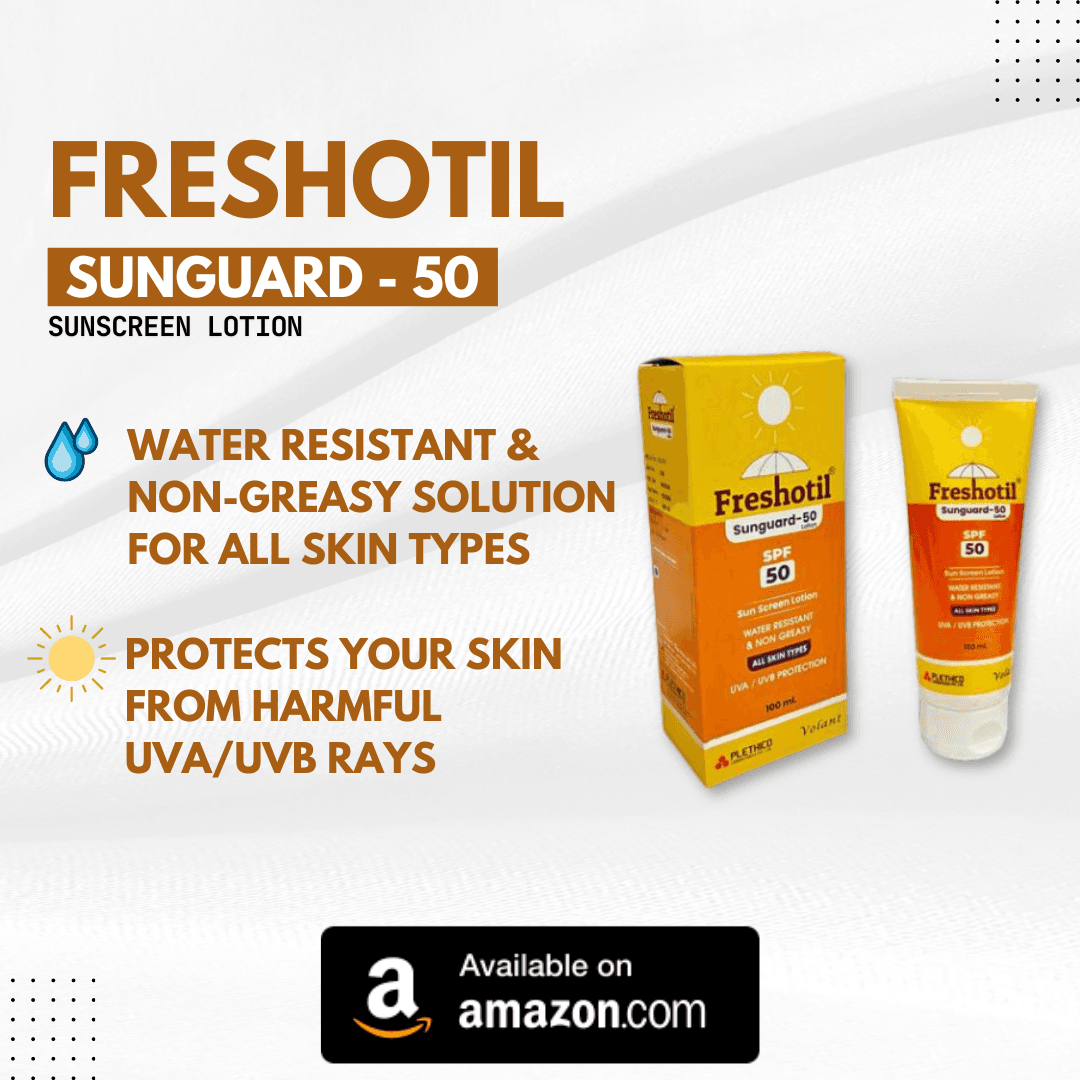
Freshotil Sunguard-50 is an SPF 50 sunscreen lotion with UVA and UVB protection. Its lightweight, non-greasy lotion spreads comfortably over exposed skin, which makes it practical for the face, neck, hands and feet on a daily commute. 100 mL.
To help fade existing tan: Kojicid Gel
Kojicid Gel is a lightweight gel formulated to help reduce the appearance of sun tan, dark spots, acne marks and uneven tone. It contains kojic acid dipalmitate, arbutin, niacinamide, Vitamin E acetate, pine bark extract and allantoin, in a non-greasy, fast-absorbing texture for day and night use. 15 g, pack of 2.
To cleanse and exfoliate: Kojicid Brightening Facewash
Kojicid Brightening Facewash combines glycolic acid to gently lift dead surface cells and salicylic acid to help clear pores, with kojic acid dipalmitate and L-glutathione. 70 ml, pack of 2. Glycolic acid makes skin more sun-sensitive, so sunscreen is not optional while you use it.
Want the science behind kojic acid in more depth? Read our complete guide to kojic acid for dark spots and acne marks.
Prevent with SPF 50. Fade with Kojicid. Cleanse with Kojicid Facewash.
Removing Tan From Face, Hands, Feet and Neck
Face
Cleanse with a gentle exfoliating face wash, apply a leave-on treatment to the tanned areas, and use sunscreen every morning — including the ears and hairline.
Hands and arms
The backs of the hands get sun every time you drive, ride or commute. Apply sunscreen to them every morning and reapply after washing your hands. Moisturise at night.
Feet (sandal tan)
Sandal lines are common in India. Apply sunscreen to the tops of your feet when wearing open footwear, and moisturise at night. Feet usually fade slowest.
Neck
Often forgotten. Extend face sunscreen down to the neck and the back of the neck, especially if you wear your hair up.
Kojicid Gel comes in 15 g tubes and is best kept for the face. For larger areas such as arms and feet, consistent sunscreen and moisturising do most of the work.
Tan Removal Home Remedies: What to Skip
Kitchen remedies are popular, but some can do more harm than good. Here is an honest look:
| Remedy | Verdict | Why |
|---|---|---|
| Lemon juice | Skip it | Acidic and can irritate skin. Citrus on skin followed by sun can cause a reaction that leaves dark patches. |
| Baking soda or toothpaste | Skip it | Too harsh for the skin barrier; causes irritation and dryness. |
| Rough sugar or salt scrubs on the face | Skip it | Can cause tiny tears and irritation, which can lead to more darkening. |
| Besan and curd pack | Mild, okay occasionally | A gentle cleansing and softening pack. It may make skin look fresher but does not target pigment strongly. Patch test first. |
| Aloe vera | Soothing, okay | Comforting on sun-exposed skin. Good for soothing; not a tan remover on its own. |
Whatever you try, patch test first and stop if your skin stings, reddens or itches. Irritated skin tends to darken, not lighten.
How to Prevent Tanning in the First Place
Use enough sunscreen — about two finger-lengths for the face and neck.
Apply 15–20 minutes before going out and reapply every 2–3 hours outdoors.
Cover up on two-wheelers — gloves, full sleeves and a scarf protect hands and arms.
Avoid peak sun roughly between late morning and mid-afternoon when you can.
Do not skip cloudy and winter days — UVA is present all year.
Protect indoors near windows — see why sunscreen matters indoors.
Oily skin and hate sticky sunscreen? Our SPF guide for oily skin covers textures that are easier to wear daily.
Myth vs Fact
Myth: Dark skin does not need sunscreen.
Fact: Darker skin has more natural protection against sunburn, but it still tans, develops uneven tone and suffers long-term sun damage.
Myth: Tan removal means becoming fairer.
Fact: It means returning to your own natural shade. Nothing safe makes you lighter than that, and that is not the goal.
Myth: Scrubbing harder removes tan faster.
Fact: Harsh scrubbing irritates skin, and irritation can trigger more pigment. Gentle and consistent works better.
Safety and When to See a Dermatologist
Use products safely
- Patch test new products on the inner forearm for 24–48 hours.
- Do not apply actives on sunburnt, broken or freshly waxed skin.
- Avoid the eyes and lips.
- Stop use if you get burning, swelling, a rash or persistent redness.
- Pregnant or breastfeeding? Check with your doctor before using new actives.
See a dermatologist if
- You have symmetrical brown patches on the cheeks, forehead or upper lip — this may be melasma, not tan
- Darkening does not improve after three months of sun protection
- A spot or mole changes in size, shape or colour, bleeds or itches
- You get blistering sunburn, or a rash after sun exposure
Frequently Asked Questions
How can I remove sun tan from my face quickly?
There is no safe overnight fix. The fastest realistic approach is daily sunscreen to stop further tanning, a gentle exfoliating face wash, and a leave-on treatment with ingredients like kojic acid, used consistently for several weeks. Harsh scrubs and lemon juice can irritate skin and make darkening worse.
Does sun tan go away on its own?
Yes, tan usually fades on its own as your skin renews itself, provided you stop getting more sun exposure. A light tan may fade in a few weeks; a deep tan can take months.
How long does it take for tan to fade?
It depends on how deep the tan is. Light tan often fades within a few weeks; moderate tan takes several weeks to a couple of months; long-standing tan on hands and feet can take longer. Daily sunscreen is essential throughout.
Which face wash is good for tan removal?
A face wash with gentle exfoliating acids can help surface cells shed more evenly. Kojicid Brightening Facewash contains glycolic acid and salicylic acid, along with kojic acid dipalmitate and L-glutathione. Because a face wash is rinsed off quickly, pair it with a leave-on product and sunscreen.
How do I remove tan from my hands and feet?
Apply sunscreen to the backs of your hands and tops of your feet every day, reapply after washing, and moisturise at night. Hands and feet usually take longer to fade than the face because they get sun almost every day.
Can sunscreen remove tan?
Sunscreen does not remove existing tan, but it prevents new tan. That allows your existing tan to fade as skin renews. Without sunscreen, other treatments struggle to keep up.
Is tan removal the same as skin whitening?
No. Removing tan means helping skin return to its own natural shade by reducing excess pigment from sun exposure. It does not make you lighter than your natural skin colour, and no safe product should claim to.
Do I need sunscreen on cloudy days to prevent tan?
Yes. A large share of UV passes through clouds, and UVA — which contributes to tanning — is present all year and also passes through window glass.
Stop the Tan, Then Let It Fade
Daily sunscreen, a gentle exfoliating cleanser, a leave-on treatment and a few weeks of patience. Explore Freshotil Sunguard-50, Kojicid Gel and Kojicid Brightening Facewash on our product pages.
Sunguard-50 100 mL · Kojicid Gel 15 g · Facewash 70 ml · Sold on Amazon India
This article is for general information and is not medical advice. For melasma, persistent pigmentation, or any spot that changes in size, shape or colour, consult a dermatologist. Always patch test new products and follow the directions on the pack.