Kojic Acid for Dark Spots,
Acne Marks & Tan
The pimple healed weeks ago, but the mark is still there. Here is how kojic acid works, how it compares with niacinamide and vitamin C, a safe routine with Kojicid Gel and Kojicid Facewash, and an honest timeline for results on Indian skin.
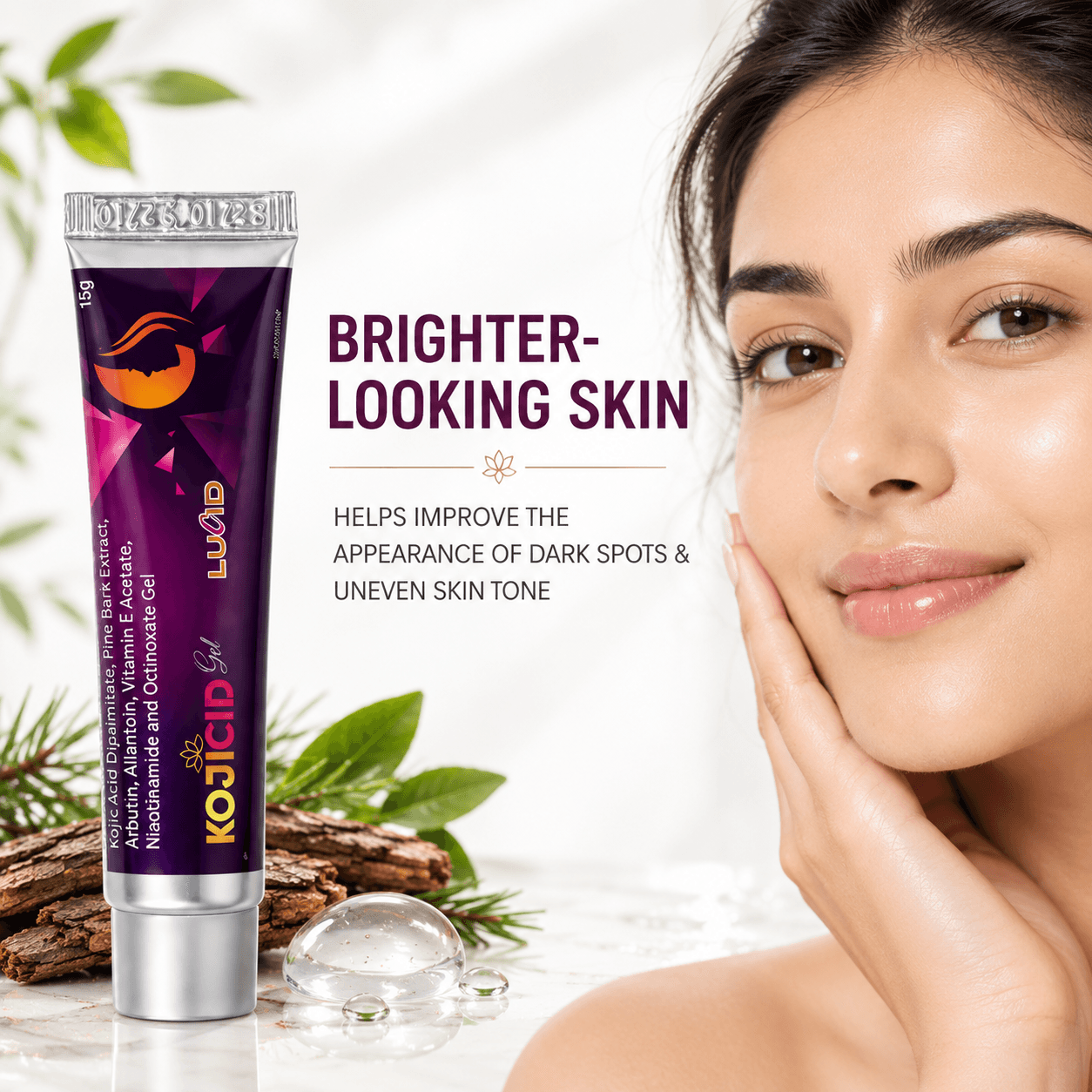
Non-Greasy · Day & Night
Kojic acid helps reduce the appearance of dark spots, acne marks, sun tan and uneven skin tone by slowing down the production of melanin, the pigment that causes darkening. It works gradually — visible improvement usually takes several weeks of consistent daily use — and it only works if you also wear sunscreen every day, because sun exposure keeps creating new pigment. Kojic acid evens out tone; it does not change your natural skin colour.
Why Dark Spots Are So Common on Indian Skin
Indian skin types have active melanocytes — the cells that make melanin. That is a real advantage, because melanin gives natural protection against the sun. The downside is that these cells react strongly to any trigger by producing extra pigment, and that extra pigment shows up as dark patches.
| Type of darkening | What it looks like | Main cause |
|---|---|---|
| Acne marks (PIH) | Flat brown or dark marks where pimples used to be | Inflammation from acne triggers extra melanin |
| Sun tan | Darker exposed areas — face, neck, arms, hands | UV exposure |
| Sun spots | Small, well-defined brown spots on cheeks and forehead | Years of cumulative sun exposure |
| Uneven tone / dullness | Patchy, tired-looking skin | Sun, pollution, dead skin build-up |
| Melasma | Symmetrical brown patches on cheeks, forehead, upper lip | Hormones plus sun and heat — needs a dermatologist |
The important part: acne marks are not scars. A scar changes the texture of your skin — a pit or a bump. A mark is only colour, and colour can fade. That is exactly what ingredients like kojic acid are for.
What Is Kojic Acid?
Kojic acid is a natural compound first obtained from fungi used in fermenting foods such as rice for sake and soy sauce in Japan. It has been used in skincare for decades to help brighten skin and even out tone.
How it works
To make melanin, your skin needs an enzyme called tyrosinase. Kojic acid interferes with tyrosinase, so less new pigment is produced. As your skin naturally renews itself and pigmented cells move up and shed, spots look lighter because less new pigment is replacing them.
Kojic acid vs kojic acid dipalmitate
Pure kojic acid is unstable — it can break down and turn brown when exposed to light and air. Kojic acid dipalmitate is a more stable form, which is why it is widely used in modern formulas. Both Kojicid Gel and Kojicid Facewash use kojic acid dipalmitate.
Kojic Acid vs Other Brightening Ingredients
You will see many dark-spot ingredients on Indian shelves. Here is how they compare, in plain language:
| Ingredient | How it helps dark spots | Good to know |
|---|---|---|
| Kojic acid | Slows melanin production (tyrosinase) | Widely used for tan, acne marks and uneven tone |
| Niacinamide (Vitamin B3) | Reduces transfer of pigment to skin cells | Gentle; also helps with oil and redness |
| Arbutin | Slows melanin production, similar pathway to kojic acid | Often paired with kojic acid |
| Vitamin C | Antioxidant; also slows melanin | Also helps against pollution and UV stress |
| Glycolic acid (AHA) | Exfoliates dull, pigmented surface cells | Makes skin more sun-sensitive — sunscreen is a must |
| Salicylic acid (BHA) | Clears pores, helps prevent new acne, so fewer new marks | Good for oily, acne-prone skin |
| Glutathione | Antioxidant associated with brighter-looking skin | Used topically in cleansers and creams |
| Hydroquinone | Strong pigment reducer | A medicine; use only under medical supervision |
The takeaway: no single ingredient does everything. Formulas that combine ingredients working on different steps — slowing pigment, exfoliating, preventing new acne — make more sense than a single active.
The Kojicid Range: What Is Inside
Kojicid Gel — the leave-on treatment
Kojicid Gel is a lightweight brightening gel made to help reduce the appearance of dark spots, acne marks, sun tan and uneven skin tone. It has a non-greasy, fast-absorbing texture, suits day and night use, and is designed not to clog pores or leave residue — useful for oily and acne-prone skin in humid weather. It comes as 15 g tubes, pack of 2.
Kojic acid dipalmitate
The stable form of kojic acid, to support skin clarity.
Arbutin
Works alongside kojic acid on pigment.
Niacinamide
Helps even tone and supports the skin barrier.
Vitamin E acetate
Nourishes and supports the skin barrier.
Pine bark extract
Supports skin texture.
Allantoin
A soothing, skin-conditioning ingredient.
Octinoxate
A UV filter. It does not replace a proper sunscreen.
Kojicid Brightening Facewash — the cleanser
Kojicid Brightening Facewash is an actives-led cleanser, not a plain everyday face wash. It comes as 70 ml tubes, pack of 2, and is suitable for all skin types.
- Kojic acid dipalmitate + L-glutathione — Work on the look of dark spots and uneven tone.
- Glycolic acid — Gently lifts dead surface cells that make skin look dull.
- Salicylic acid (BHA) — Helps clear pores and manage oil. Fewer new pimples means fewer new marks.
Why use both?
A face wash stays on your skin for under a minute, so its job is to prepare the skin — clearing oil, lifting dead cells and keeping pores clear. The gel stays on your skin for hours, which gives the kojic acid time to work. Cleanser plus leave-on treatment is a more complete routine than either one alone.
Kojicid Gel — 15 g, pack of 2 · Kojicid Facewash — 70 ml, pack of 2
The Routine: How to Use Kojic Acid for Dark Spots
- Wash with Kojicid Facewash — small amount, damp skin, 20–30 seconds, rinse well
- Apply a small amount of Kojicid Gel to clean, dry skin
- Moisturise if skin feels dry
- Broad-spectrum SPF 50 — every day
- Wash with Kojicid Facewash, or a gentle cleanser if skin feels sensitive
- Apply Kojicid Gel to clean, dry skin
- Moisturise if needed
- Weeks 1–2: gel once a day at night, facewash once a day
- Week 3 onwards: move to twice daily, as directed on the pack, if skin is comfortable
How much gel? Roughly a pea-sized amount for the whole face, or a thin layer on specific spots. Using more does not make it work faster; it only raises the chance of irritation. Always follow the directions on the pack.
Sunscreen Decides Whether Any of This Works
Every time UV light hits your skin, it signals your melanocytes to make more pigment. Use kojic acid at night but step out without sunscreen the next day, and you are slowing pigment down with one hand and switching it back on with the other. Glycolic acid also makes skin more sensitive to the sun.
- Use a broad-spectrum (UVA + UVB) SPF 50 every morning — even on cloudy days
- Use enough — around two finger-lengths for the face and neck
- Reapply every 2–3 hours outdoors, and after sweating or towelling
- Wear it indoors too if you sit near windows — see why sunscreen matters even indoors
A lightweight option is Freshotil Sunguard-50. If your skin is oily or acne-prone and you dislike sticky sunscreen, see our SPF guide for oily skin and our guide to sunscreen for acne-prone skin.
How Long Does Kojic Acid Take to Work?
Skin renews its surface roughly every four to six weeks, and pigment fades as that renewal happens, so dark-spot treatments are slow by nature. A realistic picture for consistent daily use with sunscreen:
- Weeks 1–2
Skin may look fresher and less dull, mostly from cleansing and exfoliation. Spots themselves look the same.
- Weeks 4–6
Newer, lighter acne marks and recent tan may start to look softer.
- Weeks 8–12
More visible evening of tone for many people. Older and deeper spots take longer.
- Beyond 12 weeks
Continued gradual improvement, as long as sun protection is consistent.
Results vary from person to person. Deep, long-standing pigmentation and melasma respond more slowly and often need a dermatologist’s treatment plan.
Tips That Help Dark Spots Fade Faster
Stop picking pimples. Squeezing increases inflammation, and more inflammation means darker, longer-lasting marks.
Treat active acne. Fewer new pimples means fewer new marks.
Never skip sunscreen. It is the difference between marks fading and marks staying.
Be consistent. Daily use for 8–12 weeks beats aggressive use for 2 weeks.
Do not stack too many actives. Kojic acid, strong retinoids, acid peels and scrubs all at once irritate skin, and irritation can cause more pigmentation.
Avoid lemon juice and harsh scrubs. DIY remedies like lemon can irritate skin and even darken it in the sun.
Still getting new breakouts? Our guide to face wash for acne-prone skin covers how to reduce them — and fewer pimples means fewer new marks.
Kojic Acid Side Effects and Safety
Kojic acid is widely used in cosmetic products, but like any active ingredient it can irritate some people — typically mild tingling, redness or dryness in the first few weeks, and in some sensitive people, an allergic reaction.
Stay safe
- Patch test first on the inner forearm or behind the ear for 24–48 hours.
- Avoid the eyes, lips and inside of the nose.
- Do not apply on broken, cut, burnt or sunburnt skin.
- Stop use if you get burning, swelling, a rash or persistent redness, and consult a doctor.
- Pregnant or breastfeeding? Check with your doctor before starting any new active skincare.
- Using prescription creams (retinoids, hydroquinone, steroids)? Ask your dermatologist first.
See a dermatologist if
- You have symmetrical patches on the cheeks, forehead or upper lip (possible melasma)
- A spot is changing in size, shape or colour, bleeding or itching
- Pigmentation is not improving after 3 months of consistent care
Myth vs Fact
Myth: Kojic acid is a skin-whitening product that makes you fair.
Fact: Kojic acid helps reduce excess pigment — spots, marks and tan — so tone looks more even. It does not change your natural skin colour, and it should not. The goal is healthy, even-toned skin.
Myth: If a little works, more works faster.
Fact: Overusing actives causes irritation, and irritation can trigger more pigmentation.
Myth: You only need sunscreen when you go out in the sun.
Fact: UVA passes through clouds and windows. Daily sunscreen is essential while treating dark spots.
Myth: Acne marks are permanent.
Fact: Flat brown acne marks usually fade with time, sun protection and the right ingredients. Pitted scars are different and need professional treatment.
Frequently Asked Questions
Is kojic acid good for dark spots?
Yes. Kojic acid is widely used to help reduce the appearance of dark spots, acne marks, sun tan and uneven tone. It works by slowing the production of melanin. Results are gradual and depend on daily sunscreen use.
How do I use Kojicid Gel?
Apply a small amount to clean, dry skin and spread it evenly over the affected area until absorbed. Use twice daily, morning and night, as directed on the pack. Always follow with sunscreen in the morning.
Can I use kojic acid every day?
Yes, kojic acid products like Kojicid Gel are designed for daily use. If your skin is sensitive, start once a day for the first one to two weeks, then increase as tolerated.
Can I use kojic acid face wash daily?
The Kojicid Brightening Facewash pack directs daily use. Because it also contains glycolic and salicylic acid, people with sensitive or dry skin may prefer to start once a day and moisturise afterwards.
Is kojic acid good for acne marks?
Yes. Flat brown or dark marks left after pimples are one of the most common reasons people use kojic acid. The salicylic acid in Kojicid Facewash also helps keep pores clear, which means fewer new breakouts and fewer new marks.
Can I use kojic acid with niacinamide or vitamin C?
Yes, these are commonly combined because they work in different ways. Kojicid Gel already contains niacinamide alongside kojic acid and arbutin. Introduce any new product one at a time.
Does kojic acid remove sun tan?
Kojic acid helps fade the look of sun tan over time by reducing new pigment production. Daily sunscreen is essential; without it, tan keeps coming back.
Is kojic acid safe for oily and acne-prone skin?
In general, yes. Kojicid Gel has a non-greasy, fast-absorbing texture designed not to clog pores. Patch test first and avoid applying on broken or inflamed skin.
Does kojic acid make skin fair permanently?
No. Kojic acid evens out tone by reducing excess pigment; it does not permanently change your natural skin colour. Without sun protection, tan and spots can return.
How long does kojic acid take to show results?
Many people notice softer marks after about 4 to 6 weeks, with more visible evening of tone at 8 to 12 weeks of consistent daily use with sunscreen. Older, deeper spots take longer.
Build Your Dark Spot Routine
A cleanser that keeps pores clear and lifts dull cells, a leave-on treatment that gives kojic acid time to work, and a broad-spectrum SPF 50 every morning. Be gentle, be consistent, and give it 8–12 weeks.
Gel 15 g · Facewash 70 ml · Sunguard 100 mL · Sold on Amazon India
This article is for general information and is not medical advice. For melasma, persistent pigmentation, or any spot that changes in size, shape or colour, consult a dermatologist. Always patch test new products and follow the directions on the pack.